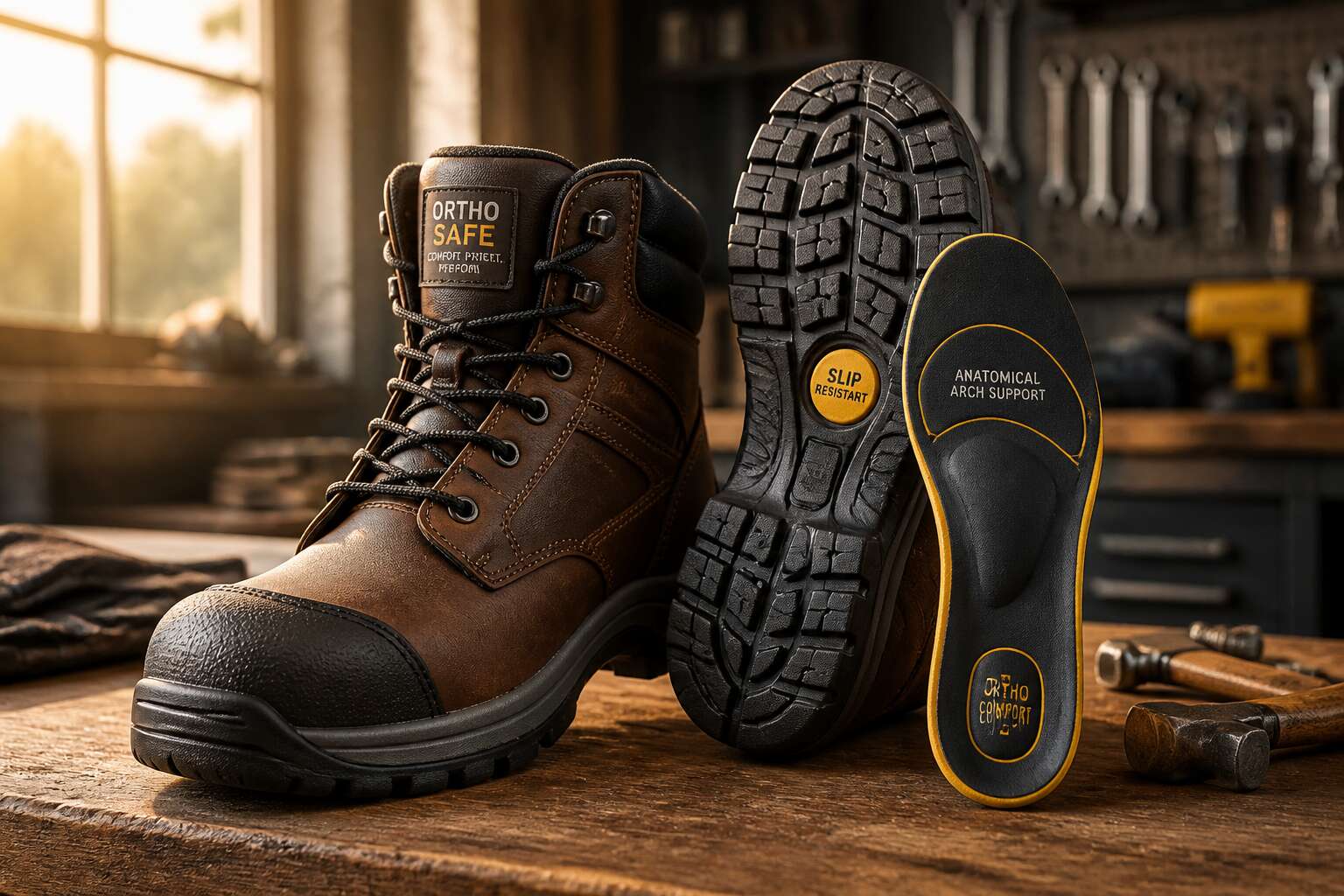
Understanding Orthopedic Safety Footwear
What Makes a Safety Boot Orthopedic?
Ask any construction worker in Johannesburg about safety boots orthopedic claims and you will get an eye roll. The phrase conjures images of clunky footwear designed by podiatrists with no sense of style. But the reality is more nuanced. Orthopedic safety boots support the foot’s natural arch, distribute pressure evenly, and reduce fatigue during 12 hour shifts on unforgiving surfaces.
What transforms standard PPE into safety boots orthopedic in the true sense? It comes down to three components: a contoured footbed, a shock absorbing midsole, and a toe box that refuses to squash your toes into submission. South African workers face unique conditions, from scorching mine shafts to wet coastal docks.
Here is what separates genuine orthopedic construction from marketing fluff:
- A removable insole that accommodates custom orthotics
- A heel cup that stabilises the ankle during lateral movement
- A shank that provides torsional rigidity for climbing and crouching
These features matter when you spend a third of your life standing on concrete. The right pair will not turn you into a marathon runner, but it will keep your feet from filing a formal complaint.
Key Safety Standards and Certifications
About 27% of South African workplace injuries involve lower limbs, yet many workers treat safety boots orthopedic claims as an afterthought. Certification tells you what a boot actually does under load. A boot that feels heavenly in the shop can still fail a 200 joule impact test. That is why the SABS mark and a valid SANS 20345 rating should guide every purchase. Orthopedic features do not replace compliance. Both must be present. I have watched workers pay extra for orthotic footbeds and then ignore the standard stamped on the tongue.
Here are the certifications to verify before you trust any safety boots orthopedic:
- SANS 20345: the national adoption of EN ISO 20345, covering toe impact and compression
- SRC rating for slip resistance on wet and slippery surfaces
- NRCS letter of authority for legal sale in South Africa
A boot that passes these tests and carries a genuine orthopedic footbed is rare. It will survive the site and your feet.
Essential Features to Look For in Supportive Work Boots
Arch Support and Footbed Design
The average human foot strikes the ground about 5,000 times a day. On a hard concrete floor, that force travels straight up your leg. When you are looking for safety boots orthopedic, the footbed is where the real engineering happens.
A deep heel cup is critical. It holds your calcaneus in place, preventing the ankle roll that leads to shin splints. Look for a firm ridge along the instep. This supports your arch without collapsing over time.
Check the midsole for torsional rigidity. Bend the boot. If it folds too easily, your plantar fascia will not forgive you later. The best footbeds are resilient, not plush.
- Firm arch contour that matches your foot shape
- Deep heel cup that grips your heel firmly
- Removable insole for custom orthotics or replacement foam
That last point matters when you work in South Africa. A removable insole lets you adjust support without buying a new pair of safety boots orthopedic.
Shock Absorption and Cushioning Systems
The heel strike sends a shockwave through your calcaneus and up the tibia. On a concrete factory floor in Johannesburg, that impact repeats thousands of times per shift. Safety boots orthopedic need a cushioning system that absorbs this energy before it reaches your joints.
Polyurethane midsoles offer a balance of density and rebound. EVA foam is lighter but compresses faster in heat, which matters in the South African climate. Some manufacturers layer both materials for a progressive cushioning effect. The outer layer handles initial impact, while the inner layer provides a firmer base.
The drop height, the difference between heel and forefoot elevation, changes how you walk. A lower drop encourages a more natural stride, but excessive cushioning can compromise proprioception, the feedback your feet send to your brain.
- Dual density midsoles that combine shock absorption with stability
- Heel strike zones with reinforced padding for high impact areas
- Moisture wicking insoles that resist compression from sweat
Toe Protection and Durable Materials
The average steel toe cap absorbs 200 joules of impact, yet that rating means little when the upper tears after a season of mine dust and Highveld humidity. Safety boots orthopedic in this climate need toe protection that balances mass with mobility. Steel remains the standard for impact resistance. Composite toes are lighter and do not conduct cold or electricity. Alloy toes offer steel strength with a thinner profile, giving toes more room to spread.
Durable materials determine how long the boot retains its orthopedic structure. I have watched boots fail at the seam before the sole ever wore down. Look for these features:
- Full grain leather uppers that repel water and resist abrasion
- Kevlar or nylon thread stitching in high stress zones
- High durometer rubber outsoles for heat and oil resistance
The best safety boots orthopedic combine these elements with a puncture resistant plate, because a nail through the foot ends a shift faster than any fatigue.
Ankle Support and Stability Elements
The ankle is where most safety boots orthopedic fail quietly. A boot can pass every impact test and still allow the talus to roll on a loose stone. Ankle support requires more than padding. It is a restraint system that keeps the talus and calcaneus aligned while the foot works through mud, gravel, and uneven plant floors.
When evaluating for stability, inspect three zones:
- The heel counter. Press it with a thumb; it should resist crushing.
- The collar height. It should rise above the malleoli without chafing the Achilles tendon.
- The lacing system. It should lock at the instep to prevent heel slip.
When a boot allows lateral roll, that load transfers to the knee, and the knee passes it higher. I have watched this chain reaction end a shift early. The best safety boots orthopedic use a nylon shank and a flared outsole to widen the base of support.
Breathability and Moisture Management
A boot that traps heat makes a twelve hour shift on a concrete floor unbearable. Sweat collects around the metatarsals, softens the skin, and leads to blisters. Breathability controls friction, odour, and the dampness that follows most waterproof boots.
When evaluating safety boots orthopedic, check the lining first. It should wick moisture away from the foot. Check the side panels. They should allow air exchange without admitting water. Check the insole. It should be removable so it can dry overnight.
- Closed cell foam footbeds that resist sweat absorption
- Perforated leather or textile uppers in high heat zones
- Hydrophilic membranes that move vapour outward
A boot that stays wet increases the risk of fungal infections. Safety boots orthopedic design must balance airflow with protection. Materials that breathe and also survive a hose test are the priority.
Top Benefits for Working Professionals
Reducing Foot Fatigue and Chronic Pain
Every working day, your feet absorb forces several times your body weight. For professionals in logistics, mining, or engineering, that adds up to chronic pain over years. The solution lies in safety boots orthopedic that offer more than impact protection.
These boots use targeted compression zones to support the metatarsal arch and heel. They also slow pronation, reducing strain on the knees and lower back. In my experience with field workers, switching to a properly fitted pair cuts fatigue within two weeks.
- Decreased morning stiffness
- Lower incidence of plantar fasciitis
- Improved posture during prolonged standing
Reducing foot fatigue is not about padding alone. It is about controlling motion and distributing load. Safety boots orthopedic that prioritise these mechanics let you finish a shift with energy left over. Chronic pain loses its grip when the foot sits in a neutral, supported position.
Preventing Workplace Injuries and Accidents
In South Africa’s mining sector, one in five workplace injuries involves the foot or ankle. That statistic should alarm anyone who spends shifts on their feet. Safety boots orthopedic change the odds by keeping the foot in a stable position, which reduces the chance of rolling an ankle on uneven ground.
- Stable heel support lowers slip risk on wet steel
- Contoured footbeds improve balance when carrying loads
- Shock distribution reduces the force reaching the knee after a misstep
I have watched workers navigate rock piles and muddy trenches with confidence because their boots respond predictably. The right pair of safety boots orthopedic also prevents puncture wounds by keeping the foot centred on the sole. When your feet stay planted, your whole body stays upright.
Improving Posture and Spinal Alignment
Every shift on hard ground sends force up the legs and into the lower spine. When a worker stands on a poorly constructed sole, the pelvis tilts, the lower back compensates, and the shoulders follow. Safety boots orthopedic correct this cascade. The heel cup holds the calcaneus in a neutral position, which allows the sacroiliac joint to remain level. I have seen workers with chronic lumbar strain report a marked change within weeks of switching.
Here is what a properly aligned lower limb does:
- Maintains the natural lumbar curve during prolonged standing
- Reduces lateral pelvic tilt on sloped surfaces
- Keeps the thoracic spine stacked over the pelvis
The result is a straight line from the ear to the ankle. That line means the erector spinae muscles work less to stabilise the trunk. The cost of a boot that ignores alignment is measured in foot pain and in spinal wear.
Accommodating Custom Orthotics and Insoles
A custom orthotic is a quiet argument with gravity, and it needs a boot that listens. Safety boots orthopedic with a removable footbed let your prescribed insole sit flush, never tilting inside a hollow. In my time fitting workers along the Durban harbour, I have watched a good orthotic erase the tremor from a tired stride. The benefits arrive without drama:
- The insole maintains its structural memory through a full shift
- The heel counter holds the orthotic’s rear edge firmly
- Ground contact feels composed under every metatarsal
Your weight settles into the boot’s design rather than against it. A worker who wears tailored insoles avoids the micro corrections that accumulate as inflammation. The upper flexes around the insert instead of squeezing it. That agreement between foot and boot is the quiet foundation of a long career.
How to Choose the Right Pair for Your Job
Assessing Your Work Environment and Hazards
In the Northern Cape mining sector, I noticed how the ground, whether wet clay, crushed rock, or scattered metal shards, shapes every footstep. Each surface leaves its mark on workers who spend entire shifts standing. Choosing safety boots orthopedic is a response to your specific environment, not a style decision. The hazard assessment process narrows the options considerably.
Common threats include:
- Wet or greasy surfaces demanding deep treads
- Sharp debris requiring puncture resistant soles
- Extreme heat or cold affecting material choice
A Free State farm slope differs from a Cape Town warehouse floor. The boots must answer the ground you actually work on.
Measuring and Sizing Considerations
Measure your feet at the end of a shift, not the morning. Mineworkers in the Northern Cape taught me this, their feet swell by a full half size after eight hours on hard ground. A safety boots orthopedic pair sized in the morning turns painful by afternoon.
Selecting safety boots orthopedic goes beyond a quick slip-on. The socks you wear on site change the fit dramatically. Both feet need measuring, since one typically runs larger. A thumb’s width between the longest toe and the boot’s interior edge signals correct length. The heel should lift no more than a few millimetres with each stride.
Bending your knees and walking on an incline at the store reveals what flat floors hide. Boots that feel snug at the counter often pinch on a slope or loose gravel. The size that works in the showroom must survive the actual shift.
Matching Boot Features to Specific Foot Conditions
A worker’s foot condition dictates the difference between a stride and a stumble underground. The right safety boots orthopedic pair must match the specific affliction, not merely the hazard. A miner with plantar fasciitis needs a rigid shank and deep heel cup. A worker with flat feet demands motion control and a firmer medial post. The job is equally decisive. A welder on concrete requires different cushioning than a timber worker on uneven terrain.
Consider these pairings:
- Chronic heel pain from a demanding shift calls for a rocker sole, reducing strain on the plantar fascia.
- Bunions or hammer toes require a wider toe box, allowing the foot to splay naturally inside the safety boots orthopedic shell.
The boot that serves your colleague may betray your own arches. I have seen it happen. The last shape and midsole density answer to the stresses your joints endure. Each worksite leaves its mark.
Testing Comfort and Fit Before Purchase
Before you commit to a pair of safety boots orthopedic, walk the floor where you work. Kneel, stretch, climb a ladder if the site demands it. The steel toe that feels spacious in the shop becomes unbearable when you crouch for hours. The midsole that cushions concrete fails you on loose rock. So test them under duress:
- Wear the socks you actually wear on shift.
- Try the left boot, then the right, then walk for twenty minutes straight.
- Bring your own insoles to check depth and flex.
A few minutes of comfort fades. A full day of ease is the truth. The boot that pinches in the morning will punish you by midday. Take your time. Your arches will thank you.
Balancing Budget with Long-Term Value
In South Africa, the price tag on many work boots often causes a wince. But consider the cost per shift. A boot lasting eighteen months at R1,800 outlasts three budget pairs at R900 each, and your feet emerge less battered. I have watched that arithmetic play out on site after site.
Long-term value hides in replaceable footbeds, stitched welts, and rubber compounds that grip wet mine surfaces without delaminating. Cheaper pairs hide their compromises inside the lining where you cannot see them until the heel collapses at month four.
- Leather thickness and water resistance
- Shock-absorbing midsoles that keep their density
- Repairable soles and replaceable insoles
Those elements determine whether your safety boots orthopedic remain durable assets or become expensive disappointments.
Caring for Your Orthopedic Safety Boots
Cleaning and Maintenance Best Practices
The average South African worker logs over 2,000 hours annually inside their footwear. That is a staggering amount of sweat, grime, and friction. Yet most boots never receive a proper cleaning. Your safety boots orthopedic demand more than a casual wipe. Leather needs to breathe, while moisture from a long shift can degrade stitching and support structures. I learned this the hard way after a rainy winter destroyed my first pair.
A simple weekly ritual keeps the structure sound.
- Brush off loose debris before anything else
- Wipe with a damp microfibre cloth, no soap for the first pass
- Air dry for 24 hours, never near a heater
- Condition the leather with a beeswax blend
For these safety boots orthopedic, routine care is the difference between a year of comfort and a lifetime of foot pain!
Recognizing Signs of Wear and Knowing When to Replace
A boot fails quietly. The outsole flattens until your heel strike lands harder than it should. The midsole compresses, and suddenly your safety boots orthopedic no longer absorb the shock of concrete floors. You blame fatigue, but the culprit is worn cushioning.
Look at the tread pattern. If the lugs are smooth at the toe or heel, grip is compromised. Check the shaft for deep creases or cracks when you flex the ankle.
- Worn tread exposing the midsole
- Persistent foot or knee pain after work
- Cracks in the leather or sole that let moisture in
Press the heel counter. If it buckles, structural support is gone, and replacement is overdue.
Extending Longevity with Proper Storage and Rotation
Proper storage and rotation can double the lifespan of your safety boots orthopedic. Heat and moisture are silent destroyers. A pair left in a hot car boot or beside a heater will dry out the leather and weaken the adhesives. Keep them in a cool, ventilated space, away from direct sunlight. Stuff the toes with newspaper or use a boot tree to preserve the shape.
Rotation is just as critical as cleaning. Wearing the same pair daily means the midsole never gets a chance to recover. Alternate between two pairs. This allows the cushioning foam to rebound and trapped moisture to escape. A simple habit prevents premature breakdown.
- Store boots in a breathable area, not a sealed plastic bag.
- Remove insoles and laces to air out the interior.
- Rotate two pairs on alternating workdays.
These practices protect the structural integrity of your safety boots orthopedic, reducing the need for early replacement and keeping your feet supported on long shifts.

0 Comments