Why Cushioning Matters in Protective Workwear
The Physical Toll of Hard Surfaces on Your Feet
Standing on reinforced concrete for eight hours sends shockwaves through your metatarsals. The average South African worker takes 10,000 steps per shift, each compressing the plantar fascia. Over time, this micro-trauma leads to heel spurs and joint strain.
Yet impact is not the sole threat. Hard surfaces force your foot to flatten, stretching ligaments. Cushioning is critical. Proper support absorbs energy and redistributes pressure. Without it, even a well-fitted boot becomes a source of pain, and I have seen workers learn this!
Consider what your feet endure daily:
- Constant compressive force at the heel
- Shear friction at the ball of the foot
- Muscle fatigue from stabilising on uneven ground
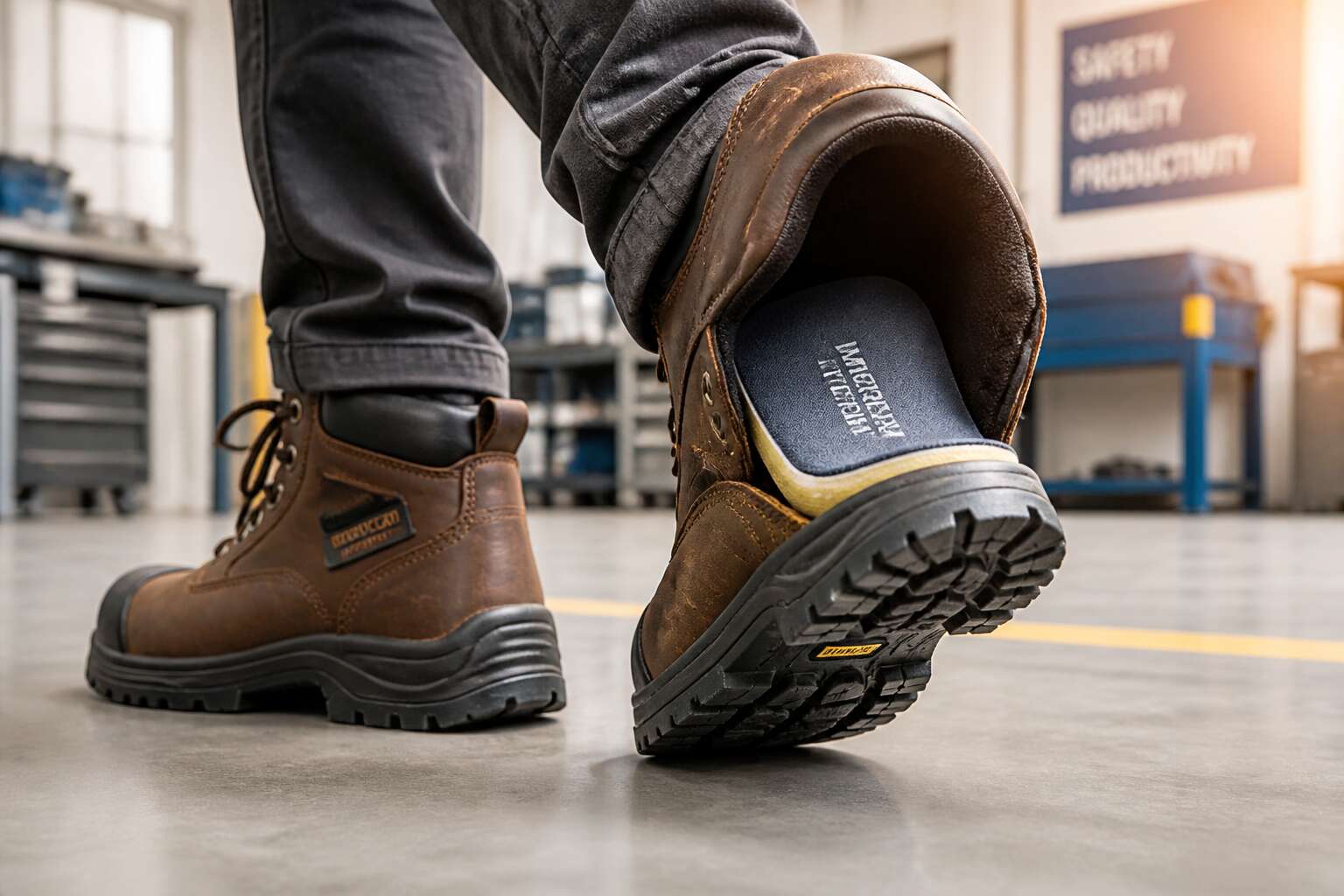
Safety boots with memory foam address this by moulding to your foot’s contour, and safety boots with memory foam provide targeted relief where hard surfaces do the most damage.
How Advanced Insole Technology Works
Cushioning in protective workwear is often an optional indulgence. This belief ignores a basic truth: a worker’s foot meets the floor with force, and every step negotiates that contract. The modern safety boot’s memory foam insole does not simply soften the blow. It employs viscoelasticity, a material property responding to heat and pressure. Under load, the foam yields at the heel while holding firm around the arch, distributing pressure across the foot’s surface. That is engineering, not luxury.
For the South African worker standing on reinforced concrete or factory floors, safety boots with memory foam deliver a specific advantage:the foot does not have to brace itself against hard spots. Instead, the insole’s contours create a custom interface. Within hours, heat from the body moulds the foam to your unique foot shape. Pressure points dissipate before they become pain points. When you remove the boot at night, the foam recovers.
The Link Between Foot Fatigue and Job Performance
Foot fatigue directly reduces job performance. A tired foot sends weaker signals to the brain, forcing the worker to allocate attention to balance instead of the task. Over a long shift, this becomes a measurable loss in accuracy and speed.
The progression follows a clear path:
- The heel pad compresses, slowing blood flow.
- The ankles stiffen, altering the worker’s gait.
- Lower back muscles take on the strain.
Safety boots with memory foam address the actual problem. They prevent the heel from bottoming out and keep the arch supported through the day. When the foot feels stable, the worker’s mind stays on the job!
Common Foot Problems from Poorly Cushioned Boots
Protective workwear often stops at the toe cap. The cushioning underneath gets ignored, yet it carries the whole body. On a South African farm, the ground is unforgiving: dry riverbeds, stone yards, wet concrete. A hard boot sole leaves the foot to absorb every jolt. Over months, that neglect turns into specific ailments.
Common foot problems from poorly cushioned boots are familiar to anyone who walks a lot:
- Bruised heels from repetitive impact
- Tendon strain along the instep
- Numb toes from compressed nerves
These injuries do not announce themselves loudly. They creep in by Thursday and hurt by Friday. I have seen workers wrap their feet in rags just to finish a shift. Safety boots with memory foam change that. The foam supports the arch and yields to the heel, then springs back. That cushioning keeps the foot stable without wasting effort. For a farmer who stands all day, safety boots with memory foam are not a luxury.
Essential Features of Comfortable Safety Footwear
Evaluating Impact Absorption Capabilities
The human heel strikes the ground roughly 1,000 times in a single kilometre of walking. Each strike sends a shockwave up the leg. The right boot dulls that wave before it reaches the knee. Comfortable safety footwear depends on the midsole for this task. A robust outsole offers grip, but the energy management happens deeper.
For evaluating impact absorption capabilities, inspect a boot with these physical checks:
- Press the heel cushion firmly. It should rebound immediately.
- Twist the sole. A rigid arch prevents overpronation.
- Look for a layered midsole with a soft top and firm bottom.
Safety boots with memory foam perform well because the foam contours to your foot while the firmer base preserves structure. This arrangement balances comfort with shock control, keeping you steady on concrete floors.
The Role of Arch Support in Long Shifts
Standing on a concrete floor for ten hours turns a subtle ache in your arch into a constant companion. That arch is a natural spring, and when it collapses under fatigue, the entire foot structure suffers. A decent insole works with this anatomy, not against it. Supportive footwear should hold the arch in a neutral position, allowing the foot to function as intended. This prevents the rolling inward that leads to heel pain and knee strain late in a shift.
Manufacturers achieve this in different ways. The best designs use a rigid shank in the midsole and a deeper heel cup to lock the foot in place. Safety boots with memory foam take this a step further. The foam moulds to the unique contours of your foot, while the firmer base underneath provides the necessary structural resistance. This combination is not a gimmick. It is a practical response to the demands of long shifts on unforgiving surfaces.
What should you look for when assessing this support?
- The insole should have a visible arch contour, not a flat slab.
- The heel should sit snugly in a deep cup for stability.
- The torsion stiffness of the sole matters more than its thickness.
This support becomes critical in South African workplaces, where temperatures and shift lengths push equipment to its limits. A boot that loses its shape by midday is a liability. The quiet resilience of a well-built boot is something you feel, not see. It is the difference between finishing a shift with energy to spare and limping towards the weekend.
Breathability and Moisture Management
In the heat of a South African shift, the inside of a boot can reach sauna conditions. Your foot produces around half a litre of sweat daily. If that moisture stays trapped, it softens the skin, invites blisters, and degrades materials. Breathability is not a comfort feature. It is a maintenance requirement.
- Perforated leather or textile panels that release heat
- Moisture-wicking liners that draw sweat away from the skin
Dry feet preserve the structural integrity of safety boots with memory foam. Wet conditions cause the foam to compress prematurely, losing its recovery. The best designs combine a waterproof outer layer with a breathable inner membrane. That balance keeps you dry from both rain and perspiration. Memory foam works best when it stays dry, and safety boots with memory foam rely on this moisture management to last through repeat shifts.
Traction and Stability Features
A single stumble on a rain slicked loading dock can end a career in seconds. Slips and falls cause a significant share of workplace injuries across South Africa, and traction is the first line of defense. The outsole of safety boots with memory foam must do more than carry you. It needs to bite into gravel, concrete, and oily steel. A deep tread pattern channels water away, while a rubber compound with high abrasion resistance keeps grip intact on hot asphalt.
Stability is the partner to traction. A wide heel base and a supportive heel counter prevent the foot from rolling on uneven ground. This lateral support works with the foam insole to keep the foot aligned, so your ankle and knee do not absorb the cost of a misstep.
Look for these features in a boot built for demanding shifts:
- Heel counter rigidity to lock the foot in place
- Tread lugs spaced wide enough to shed mud
- An ankle collar that cushions without restricting movement
A boot that grips the earth and holds the foot steady also protects the memory foam inside. Less stress on the sole means less compression over time, and that is how safety boots with memory foam survive the demands of repeat shifts.
Ankle Support and Collar Cushioning
An ankle rolled on a loose stone at a Northern Cape mine site can take months to recover. The ankle support built into safety boots with memory foam is the first barrier against that outcome. Collar cushioning wraps the lower leg, absorbing pressure from the boot shaft on every step.
A well designed collar does more than feel soft. It holds the heel firmly while allowing the Achilles tendon to flex naturally. Too much padding creates instability, too little leads to sore spots. The tongue should carry enough foam to distribute lace pressure across the instep.
When testing, inspect these details:
- Run a finger along the collar edge to check the finishing.
- Flex the ankle to see if the foam compresses without collapsing.
- Stand on a slight incline to test lateral stability.
Structured ankles prevent sudden twists, while the cushioning absorbs micro impacts during long shifts. That is the real value of safety boots with memory foam.
Materials That Combine Protection with Plush Comfort
Premium Leather vs. Synthetic Materials
Every boot tells a story of material choice. Premium leather, cut from full grain hides, offers unmatched resistance to sparks and scrapes, while its natural fibres gradually soften and conform to your foot. Synthetic materials, such as polyurethane coated nylon, bring their own strengths: they repel water, shrug off chemicals, and weigh considerably less. The real magic happens when either shell meets a memory foam insole. That combination transforms rigid protection into a plush foundation.
Compare the options:
– Leather develops a rich patina and often outlasts synthetics in dry, dusty conditions.
– Synthetics excel in wet or oily environments, where leather can crack and deteriorate.
Neither material works alone. Safety boots with memory foam need a structured exterior to anchor the cushioning. In my experience, leather feels like a tailored glove, while synthetic feels like a technical instrument. Both protect, but the memory foam beneath makes every shift bearable. South African workers deserve this balance of toughness and tenderness.
Understanding Outsole Compounds for Grip
You have to watch a worker pivot on a slick factory floor! That moment separates a boot from a liability. The outsole compound determines grip, while the upper material anchors the structure. For safety boots with memory foam, the foam cradles the foot, but the rubber sole must bite into wet concrete or oily steel. Nitrile rubber offers excellent resistance to heat and slip, while polyurethane provides lightweight cushioning in the heel strike.
- Nitrile for oil resistance
- Polyurethane for flexibility
Underneath, the memory foam absorbs shock, but the outsole transfers your weight with authority. I have found that a deep lug pattern with a wide contact patch gives that reassuring grip. The right compound and tread work as one, turning a cushioned step into a stable one.
Protective Toe Caps: Steel, Composite, and Alloy Options
Protection often demands compromise, but the right toe cap material can preserve both safety and comfort. Steel remains the unyielding standard for impact resistance, yet its weight can drain energy over a long shift. Composite toe caps offer a lighter alternative without conducting electricity, ideal for certain electrical hazards. Alloy options sit between them, blending reduced mass with solid defense.
For safety boots with memory foam, the toe cap must not undermine the plushness underfoot. A rigid shell that presses into the toes defeats the purpose of cushioning. Consider these factors:
- Steel: maximum durability, heavy, conducts cold and heat.
- Composite: non-metallic, lightweight, less bulky.
- Alloy: thinner profile, more room for the foot, balanced.
The memory foam adapts to pressure points, but only if the toe box allows enough space. A properly fitted cap works with the foam, not against it.
Selecting the Right Footwear for Your Work Environment
Identifying Workplace Hazards and Safety Ratings
According to the South African Department of Employment and Labour, over 20% of workplace injuries involve the lower extremities. That is a sobering figure when you consider that most of these incidents are entirely preventable with proper gear. Selecting the right footwear is not about choosing the most expensive option on the shelf; it is about matching the boot’s engineering to the specific floor you stand on and the debris you dodge daily.
The slick concrete floor of a packaging plant demands a different outsole than the gravel and mud of a construction site. You should first assess the surface friction and the presence of liquids before you even glance at the cushioning. Then, you must consider the impact risks. For example, a warehouse might require an impact-resistant toe, but a workshop with heavy rolling loads needs a boot that can handle compression. My rule of thumb is to map the hazard zones in your immediate work radius.
– Identify if you are working near exposed electrical circuits requiring insulated boots.
– Note if you frequently climb ladders or inclined surfaces where ankle flexion is critical.
– Confirm if you are around falling objects or just rolling loads.
– Check for chemical spills that could degrade the boot’s upper material.
Once you have that hazard map, you can decode the safety ratings on the label. These ratings are not marketing fluff; they are specific performance benchmarks. A safety boot with a rating for impact and compression is essential for heavy industry, but if your job is primarily walking on hard, dry floors, you need to prioritize the cushioning system to reduce fatigue. The best option often combines a high safety rating with the pressure relief of safety boots with memory foam, ensuring you are protected from external threats without sacrificing internal comfort. Remember, a heavy boot that you refuse to wear provides zero protection, so the fit must be as competent as the safety certificate.
Proper Fit: Sizing, Width, and Lacing Techniques
A boot that fits poorly is a liability, regardless of its certifications. The right size leaves a thumb’s width between your longest toe and the toe cap, preventing pinching during descents or sudden stops. Width matters just as much; a narrow fit compresses the metatarsals, while an excessively wide one invites friction blisters that undermine shift performance.
Lacing technique transforms how a boot behaves on your foot. Lock lacing secures the heel against the collar, critical for ladder work, while a looser lower zone gives the forefoot room to splay. I have seen workers discard quality boots because the lacing never matched their instep height. For those considering safety boots with memory foam, remember that the foam conforms over time, so a snug initial fit becomes customised after a week of wear. Snug, not tight, is the goal.
Matching Boot Features to Your Specific Job Demands
Selecting the right footwear for your work environment means matching boot features to your specific job demands. A construction site requires different protection than a logistics warehouse. For example, workers on slippery surfaces need slip resistant soles, while electricians need insulating properties. When your shifts involve long periods on hard floors, safety boots with memory foam deliver consistent comfort that adapts to your foot throughout the day.
Consider the climate and terrain of your South African workplace. Hot conditions demand breathable linings, while cold storage facilities require insulation. The memory foam in safety boots with memory foam conforms to pressure points, but only if the boot’s upper and outsole match your daily movements. Assess your typical tasks before choosing a pair, and the boots will work as hard as you do.
Budgeting for Quality Without Sacrificing Protection
A small budget does not have to mean weak protection. The key is spending on what touches the ground and what supports your sole. In South Africa, harsh sunlight and rough terrain punish footwear never built for them. When you shop, inspect the outsole compound and the stitching density. Comfort features matter too. Safety boots with memory foam absorb the constant pounding of concrete floors, while the foam adapts to your foot’s shape without losing its bounce.
Prioritising your feet does not require the most expensive brand. Safety boots with memory foam still deliver shock absorption and arch support in mid range price brackets. Match the boot to your actual work environment, whether that is a dusty mining site or a slick warehouse floor. A slip resistant sole or reinforced toe cap matters more than a designer label. Durable models exist within reach if you ignore unnecessary branding and focus on function, which is the real protection.
Extending the Lifespan of Your Cushioned Work Boots
Daily Cleaning Routines for Work Boots
Every shift deposits sweat, dust, and grime into your footwear. That residue degrades the cushioning core of your safety boots with memory foam, reducing their comfort. I have learned that a two minute wipe after work does more than any expensive treatment.
Use a soft brush to dislodge dirt from stitching. Then wipe with a damp cloth and mild soap. Focus on the insole, where moisture lingers. Never force heat drying. Instead, let them rest overnight with newspaper inside to absorb humidity.
- Dust off after every shift.
- Wipe down the entire boot.
- Air out the insole separately.
This simple routine preserves the cushioning and structure. The boots will hold their shape longer, saving you money and keeping your feet protected.
Drying Techniques That Preserve Memory Foam
Heat is the fastest way to ruin a cushioned boot. A wet boot placed near a heater or left in direct sun loses its foam structure within days. The cells collapse, the arch flattens, and the boot hardens. South African conditions make this worse because humidity and heat often arrive together.
I learned this after destroying a pair in one Highveld summer. The memory foam in safety boots with memory foam needs slow, steady drying to keep its rebound. Rush the process and you compress the cushioning permanently!
- Pull the insoles out and blot them with a dry towel.
- Stuff the boot shafts with crumpled newspaper to draw moisture from the foam core.
- Set the boots near a fan, never a heat source, and turn them occasionally.
- Allow 24 hours before your next shift.
This method preserves the foam’s microcellular structure while preventing mould in the leather lining. Your safety boots with memory foam stay absorbent and your feet remain protected.
Recognizing Signs of Wear and Compression
I have seen boots fail long before their soles wore thin. Compression is the silent culprit. The heel pocket that once hugged your foot grows loose. The arch support becomes indifferent. You only notice when your feet ache at the end of a shift.
Press the insole with your thumb. It should spring back quickly. If it stays dimpled, the foam has lost its resilience. Safety boots with memory foam depend on this rebound to cushion every step.
– Check the heel counter for stability
– Feel for uneven wear on the outsole
– Notice if your knees ache more than usual
A boot that cannot return to shape cannot protect your joints. Safety boots with memory foam only perform as long as the cushioning holds. Replace them when the foam gives up, not when the sole wears through.

0 Comments