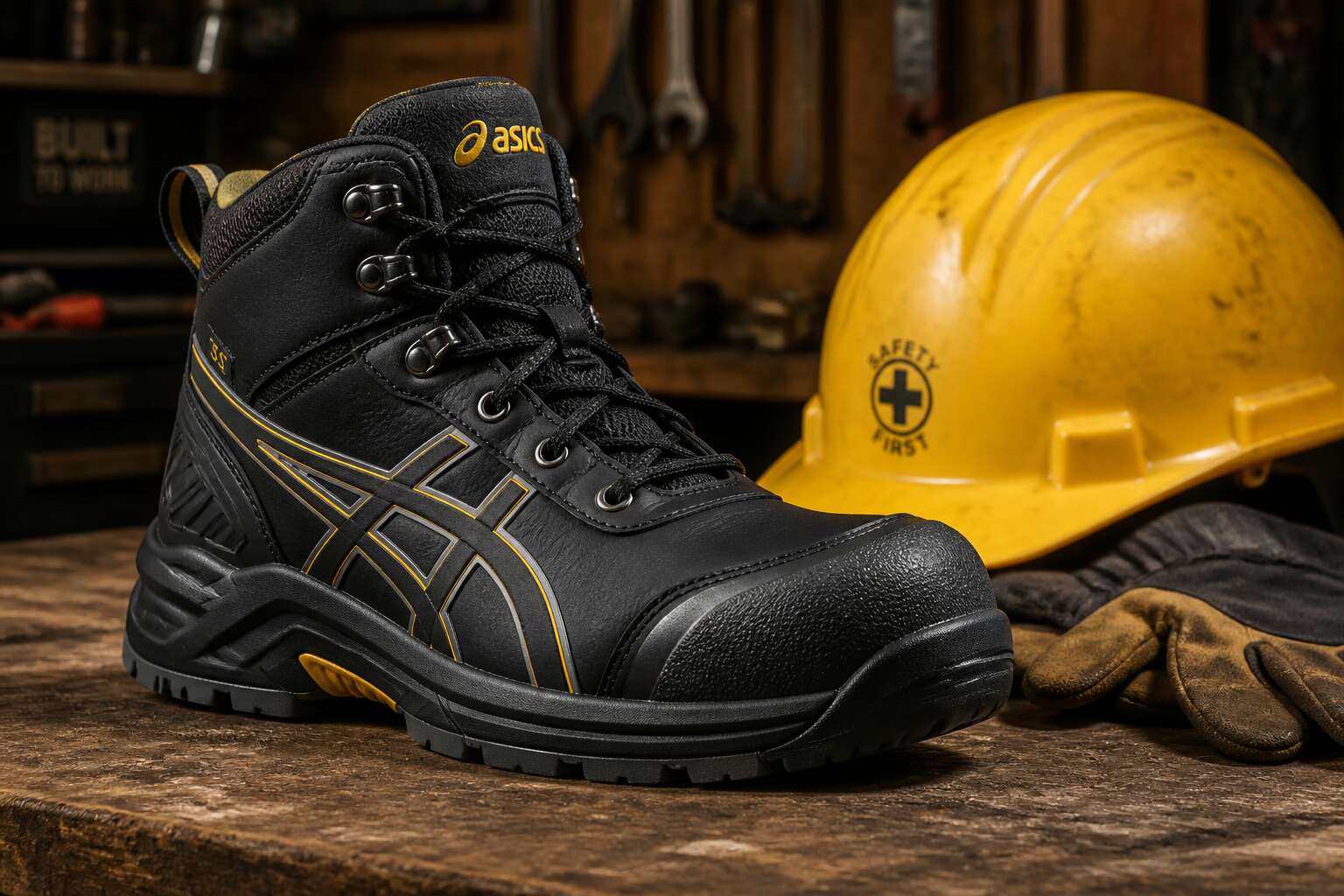
The Evolution and Positioning of ASICS Safety Footwear
The Athletic Brand’s Journey Into Protective Workwear
The evolution of ASICS into protective workwear is a quiet departure. The same engineering that once chased marathon records now braces for steel-toed demands. Safety boot asics are not a footnote; they are a deliberate chapter.
Consider the path!
- Running heritage shaped cushioning systems
- Industrial testing refined durability
- Ergonomic research redefined weight distribution
Yet the positioning remains subtle. In South African workshops, where heat and gravel are constant, the athletic engineering offers a specific advantage. The sole grips firmly, while the upper permits airflow. This is not a cosmetic sports imitation. It is genuine protective performance, shaped by detailed biomechanical research.
How Sports Shoe Technology Enhances Safety Boot Design
I first noticed the difference on a dusty construction site outside Johannesburg. The foreman, a man who had worn through every brand of boot on the market, pointed to his feet. He wasn’t complaining about fatigue. He was talking about the grip. That is when I realized the conversation around protective footwear had changed.
The technology that propels elite athletes across finish lines has found a new home on South African floors. ASICS safety boots are engineered with the same principles of shock absorption and stability that define their running shoes. The Gel technology, once reserved for marathons, now cushions the impact of a full day on concrete. This is not a marketing gimmick; it is a direct transfer of biomechanical research into industrial design.
Consider the specific demands of the local environment:
– The heat requires materials that breathe, preventing the swamp-like conditions of standard work boots.
– The uneven terrain of many sites demands a sole with aggressive traction, not just a thick tread.
– The long hours necessitate a lightweight frame that reduces the energy cost of every step.
This fusion addresses the primary failure point of traditional heavy boots. You get the safety rating, the steel toe, and the puncture-resistant plate. You also get a fit that moves with your foot rather than against it. It is the difference between merely protecting the foot and supporting the entire kinetic chain of the leg.
The result is a workday that ends with less strain on the knees and lower back. For the worker who relies on their body to earn a living, this is not a luxury. It is a fundamental upgrade to their primary tool. These boots offer a specific advantage: they mitigate the physical toll that accumulates shift after shift. They represent a shift in thinking, where safety does not come at the cost of mobility. That is a step in the right direction for any industry.
Safety Certifications and Compliance Standards to Know
A boot without a certification mark is just a shoe with a thick sole. In South Africa, that distinction carries weight. The SABS mark tells a worker that a safety boot asics has passed rigorous testing.
SABS approval under SANS 20345 is the benchmark. A safety boot asics meets this standard, along with the CE EN ISO 20345 framework used across export markets. The positioning is clear: athletic heritage does not bypass compliance.
Here is what the certification covers!
- Impact resistance up to 200 joules at the toe
- Puncture resistance through the outsole
- Slip resistance measured on steel and ceramic surfaces
Each claim traces back to a test method. A foreman on a Johannesburg site does not need to decode EU directives. He needs the right marks.
The evolution is simple. Performance footwear proved it could protect. Certification separated claims from evidence.
Who Should Consider ASICS Work Footwear
The safety boot asics has quietly shifted from a curiosity to a credible workhorse. In South Africa, the trade-off between comfort and durability used to feel permanent. That assumption no longer holds, because athletic design principles have changed how a boot performs over a full shift.
Consider the worker who stands on concrete for nine hours, then climbs stairs to a mezzanine, then kneels to inspect a cable run. That person needs flexibility, breathability, and impact protection in one package. The safety boot asics now delivers that balance without looking like a relic from a 1980s catalogue.
Who should take notice? Site supervisors, maintenance teams, logistics coordinators, and security personnel. Anyone whose role demands moving quickly while maintaining safety compliance. If your day involves more walking than lifting, this category deserves a serious look.
Top ASICS Safety Boot Models for Different Work Environments
Best Options for Industrial and Construction Sites
On a construction site, a single misplaced footstep can cost a week of work. That is why choosing the right safety boot asics matters so much! For heavy-duty industrial floors, the ASICS Stronghold series offers a steel toe cap and oil-resistant outsole. For outdoor construction, the TerraFix uses a rugged tread that grips loose gravel and muddy slopes.
Different environments demand different features. Consider these ASICS safety boot models:
- Stronghold: ideal for factory floors with heavy machinery.
- TerraFix: built for uneven terrain and wet conditions.
- AllDay: suited for warehouses where you stand for hours.
Each model integrates the brand’s athletic cushioning, which reduces fatigue without sacrificing protection. The result is a boot that feels lighter than its rating suggests.
Lightweight Favorites for Warehousing and Logistics
In the quiet hum of a warehouse, the weight of a boot becomes a burden. Logistics workers in Johannesburg or Durban often stand for ten hours straight. The ASICS AllDay model addresses this with a composite toe that saves nearly 300 grams. That difference matters when you walk twelve kilometres a shift.
The AllDay retains the brand’s gel cushioning, absorbing shock on hard floors. The outsole grips polished concrete without squeaking. For those who prefer extra support:
- The WareMax adds a mid-ankle cuff for pallet work.
- The FlowLite uses a mesh upper for warmer coastal climates.
- The GuardPro includes a puncture-resistant plate for recycling plants.
Each option keeps an athletic fit, so your feet do not feel locked in place. This sets a safety boot asics apart from traditional work boots. A safety boot asics for warehousing is less about surviving the day and more about finishing it without regret.
Slip-Resistant Models for Healthcare and Hospitality
A hospital corridor after a morning cleaning cycle has a coefficient of friction that changes without notice. The ASICS XenoSlip model addresses this with a compound that maintains contact on damp tile. This safety boot asics is designed for hospital floors. For hospitality, the CafePro uses a tighter tread pattern for polished concrete and ceramic. The WardGrip offers a middle ground for mixed surfaces. Consider these choices:
- XenoSlip: for emergency departments and labs.
- CafePro: for dining floors and bar service areas.
- WardGrip: for general clinics and reception.
Each model includes a slip-resistant outsole that meets the standard for wet and oily surfaces. The heel gel unit remains, because standing for eight hours is its own hazard. A safety boot asics in this range does not eliminate spills. It eliminates the consequences of stepping in them!
Critical Safety Features to Evaluate in ASICS Work Footwear
Steel Toe vs Composite Toe Protection
When you step onto a job site, the ground beneath you is rarely forgiving. Your choice of footwear becomes the silent contract between you and the environment, and the debate often boils down to steel versus composite. While many brands offer generic options, ASICS has engineered their work range with specific biomechanical insights that change how these materials perform on your feet.
The primary distinction lies in weight and thermal conductivity. A steel toe cap offers unmatched impact resistance, but it acts as a heat sink, freezing your toes in colder climates and turning into a furnace under the African sun. Conversely, a composite toe made from Kevlar or carbon fibre provides similar impact protection without the metallic weight. This is where the ASICS safety boot excels, particularly for those who spend hours on their feet, as the reduced mass diminishes fatigue without sacrificing the necessary safety ratings.
Understanding the nuances can guide your purchase effectively. Consider these critical evaluation points:
- Electrical Hazard Protection: Composite toes are naturally non-conductive, whereas steel requires additional insulation layers to meet the same standards.
- Thermal Resistance: Composite materials maintain a stable temperature closer to your body’s core, which is essential for comfort during long shifts.
- Durability Management: Steel resists punctures and dents better over time, but composite options are prone to cracking under severe, repeated point-load impacts.
ASICS integrates their proprietary GEL technology into the midsole, which works harmoniously with either toe material to absorb vertical shock. This is a crucial feature often overlooked by workers who focus exclusively on the cap. The outsole design also plays a role, offering grip that compensates for the slight difference in weight distribution between a steel and composite frame.
Ultimately, selecting between these materials in an ASICS safety boot involves assessing your specific workplace hazards. If you work in tight spaces where metal detectors are present, or if you lift your feet frequently throughout the day, the composite variant will serve you better. For heavy-duty demolition where crushing forces are a constant threat, the traditional steel option remains the unyielding guardian of your digits. Understanding this distinction ensures your feet remain protected and agile, regardless of the shifting terrain you call your office.
Shock Absorption and Energy Return Systems
Every step on a concrete floor sends a shockwave through the body. For tradespeople who spend eight or more hours on their feet, that repetitive impact accumulates in the knees, hips, and lower back. The ASICS safety boot addresses this directly with a focus on energy return and impact attenuation, rather than just passive protection. The midsole technology is engineered to compress upon heel strike and then rapidly expand, returning that kinetic energy to the wearer. This characteristic reduces the muscular effort required for each stride, which translates to less fatigue by mid-afternoon.
The shock absorption system is particularly effective when carrying heavy loads. The extra mass of tools and materials amplifies the force of every footfall. An effective energy return system works to dissipate that force, preventing it from travelling up the skeletal structure. This is a critical feature for workers in logistics and construction, where the day involves constant movement through warehouses or across uneven terrain.
To understand what constitutes a genuine performance safety boot, consider the construction of the sole unit:
– The cushioning layer, which provides the initial compression and rebound.
– The stability shank, which prevents torsion and supports the arch during lateral movements.
– The outsole compound, which offers traction while also contributing to the overall shock attenuation.
These components must work in concert. A boot with only a thick cushioning layer but no stability shank will feel unstable and can increase the risk of rolling an ankle. Conversely, a rigid boot with no bounce forces the joints to do the buffering. The ASICS safety boot integrates these elements to create a platform that is both supportive and responsive. The ability to walk comfortably at the end of a shift, with less joint pain, is the true measure of effective energy return.
Breathable and Moisture-Wicking Upper Materials
Highveld heat is unforgiving on a sealed leather boot. Sweat gathers around the heel and toes, softening the skin and leading to blisters that complicate every ladder climb. That is why the upper material deserves scrutiny before you choose any safety boot asics. A breathable mesh that allows vapour to escape keeps the foot dry, while a moisture-wicking lining pulls perspiration away from the skin.
Inspection of the upper reveals other critical details:
- The toe cap area needs a seamless interior to prevent friction.
- Collar padding should be firm but open enough for air circulation around the ankle.
- The tongue construction should block debris without trapping heat.
A damp boot also compromises grip on the insole. When your foot shifts inside the boot, your balance shifts with it. A safety boot asics with quick-drying fabric stays functional into the late shift!
Electrical Hazard and Static Dissipative Ratings
Electricity is invisible, which makes it the most dangerous element on a worksite. A safety boot asics with an electrical hazard rating protects against accidental contact with live circuits, while static dissipative construction prevents charge buildup in explosive atmospheres. These two ratings serve different purposes. EH boots reduce the risk of shock. SD boots control static discharge. Neither should be confused with the other. When evaluating ASICS work footwear, check the label for the specific rating. Look for:
– EH rating for electrical work
– SD rating for flammable environments
– Both ratings for mixed environments
The outsole material and insole construction determine whether the boot meets the standard. A safety boot asics that claims both ratings must pass separate tests. The difference matters when your safety depends on the sole.
Traction and Slip Resistance Across Surfaces
They calculate that over 20,000 slip and fall injuries occur on South African worksites every year. That is a grim ledger for any safety officer to confront. The conversation about traction often gets reduced to a single word on a spec sheet, but the reality is far more interesting once you inspect the sole of a safety boot asics. The rubber compound itself is the unseen element deciding whether you stay upright or meet the concrete.
Tread patterns do not exist for decoration. They channel water, mud, and industrial fluids away from the contact patch. Deep, aggressive lugs are suited for loose gravel and uneven terrain, while a denser pattern with siping performs better on slick, polished concrete. The challenge appears when you need both.
– Chevron lugs for self-cleaning in muddy conditions
– Flat contact zones for stability on ladders
– Siped edges to break up surface tension on wet floors
A safety boot asics designed for a scaffolder will fail a nurse, and vice versa. The compromise lies in a hybrid outsole that grips porous ground without sacrificing grip on smooth, oily surfaces. The rubber hardness also dictates performance. Softer compounds grip better but wear out faster, which is a poor trade for someone walking on abrasive aggregate all day.
The lateral stability of the heel becomes critical when navigating sloped surfaces. The outsole must flex at the metatarsal joint to allow a natural gait, otherwise you drag the toe and trip. This is a science of friction and geometry. The label might promise a certain coefficient of friction, but the truth is revealed in the field, on the rain-slicked steel of a loading dock or the dusty floor of a factory. That is where the construction of the safety boot asics proves its worth or its failure.
Ankle Support and Stability Mechanisms
You will forgive the ankle. It is the forgotten joint of the safety industry, forced to absorb the abuse of uneven gravel, shifting ladders, and the general tyranny of gravity. While the toe cap gets all the glory in the marketing brochures, a sprained ankle is what actually sends a worker home for six weeks. The architecture of the upper, specifically the collar and the heel counter, dictates whether you are walking on a firm foundation or a wobbling mattress. A proper safety boot asics should feel like a handshake, not a hug. It must lock the heel down without strangling the Achilles tendon, a balancing act that separates premium design from painful afterthoughts.
The internal shank is another silent hero. It resists torsion, preventing the boot from twisting violently when you land awkwardly on a rock or a stray piece of rebar. Without this rigid spine, your foot becomes a torsion wrench for the rest of your body. ASICS engineers borrow from their running shoe lineage here, utilizing a medial post that keeps the foot from rolling inward. This pronation control is not just for marathon runners; it is for the tired warehouse worker carrying a load down a rain-soaked ramp. The stability mechanism works best when it is invisible, quietly correcting your biomechanics before you even notice the misstep.
Key components to look for during the fitting process:
– A firm, external heel counter that does not collapse under thumb pressure
– A padded collar that sits high enough to support the malleolus, the bony bump on your ankle
– A lacing system that allows for independent tension at the forefoot and the instep
– A torsionally stiff midsole that resists twisting when you twist your torso
The fit of the safety boot asics must be assessed while standing, never sitting. Your foot elongates under load, and the boot needs to accommodate that shift without allowing your heel to lift. A heel slip of even two millimeters creates friction, which leads to blisters, which leads to altered gait, which leads to a fall. The lacing system should lock the midfoot to prevent forward slide into the toe box. If you can wiggle your foot laterally inside the boot, the stability mechanisms are failing. The boot should move with you, not around you, and that synergy begins with the ankle support architecture.
How to Select the Right ASICS Safety Boot for Your Workplace
Assessing Hazard Levels in Your Work Environment
Selecting the correct protective footwear starts with a brutal audit of your daily environment. The factory floor, the open pit, and the logistics warehouse each present distinct threats that demand a specific response. A general-purpose shoe will fail where specific hazards exist, so understanding your risk profile is the first step toward safeguarding your feet.
Begin with the most common danger: impact and compression. If you operate heavy machinery or move substantial loads, a reinforced toe cap is non-negotiable. The standard requires a minimum of 200 joules of impact resistance, a figure you should verify before purchase. Next, consider the ground beneath you. Slippery surfaces, often slick with oil or moisture, require outsoles with a dedicated tread pattern. The grip must channel liquids away from the contact patch to maintain traction. Finally, assess the presence of falling objects that could strike the top of your foot; a metatarsal guard adds a layer of defence here that a standard boot lacks.
The South African climate and terrain demand further scrutiny. For those working outdoors in high heat, a boot that traps moisture becomes a breeding ground for discomfort and fungal infections. Breathable mesh panels are not just a comfort feature; they are a hygiene necessity. Conversely, if your work involves water or chemicals, a waterproof membrane is critical to keep your feet dry and protected from corrosive substances. Always check for a penetration-resistant midsole if you work around nails, sharp metal, or scrap glass. This component is the only thing standing between you and a serious puncture wound.
Once the hazard assessment is complete, you can match the features to the threat. For example, a worker managing heavy pallets in a dusty cement plant will need a very different boot compared to a technician working in a dry, climate-controlled assembly line. To simplify the selection process, consider the following priorities:
1. Impact Zones: Prioritise a composite or steel toe cap for crush protection.
2. Slippery Terrain: Choose a boot with a deep, self-cleaning outsole lug pattern.
3. Electrical Work: Opt for an electrical hazard rating to insulate against live circuits.
4. Static Sensitivity: Select an electrostatic dissipative sole for environments with sensitive electronics.
In a country prone to sudden weather shifts, resistance to water is a feature that cannot be overlooked. A soaked boot leads to cold feet, which reduces concentration and increases the risk of accidents. However, waterproofing often compromises breathability. Look for modern fabrics that offer a balance, allowing sweat to escape while preventing rain from entering. The longevity of the boot also depends on the outsole compound; a rubber compound that resists oil, heat, and abrasion will endure the harsh realities of the industry far longer than a basic synthetic blend.
Ultimately, the right safety boot asics provides is one that becomes an extension of your own body. It must fit snugly around the heel to prevent slippage, yet offer enough room in the toe box to avoid cramping during long shifts. Pairing the correct technical specifications with a comfortable fit ensures that you remain protected without sacrificing mobility, allowing you to perform your duties with confidence and stability.
Getting Accurate Fit and Size Measurements
Selecting a safety boot asics without measuring your feet is like buying a parachute based on your favourite colour. A precise fit prevents blisters, black toenails, and the dreaded heel slip that turns a 12 hour shift into a personal vendetta against your footwear.
Measure both feet at the end of the day when they are at their largest. Wear the same socks you’d wear on the job. Use a Brannock device or a ruler against a wall for length and width.
- Trace your foot on paper, keeping the pen vertical.
- Measure from heel to longest toe, not the big toe.
- Check the width at the ball of the foot.
Add a thumb’s width of space in the toe box. The heel should lock down firmly. A safety boot asics that fits correctly is your ally, not your tormentor.
Choosing the Right Toe Cap and Sole Type
In the unforgiving heat of a Highveld summer or the slick concrete of a coastal warehouse, the choice of sole and toe cap dictates more than comfort. It determines survival. The selection of a safety boot asics model must begin with a brutal audit of the terrain underfoot. Forge floors demand heat-resistant rubber, while chemical plants require resistance to oil and acid degradation. A generic sole will delaminate or harden, leaving you skating across hazards.
The toe cap is a similar compromise between mass and protection. Steel remains the standard for crushing impacts, but it conducts cold and adds weight. Composite materials offer a lighter alternative but can fail under sharp penetration. Consider these factors before purchase:
– The weight of materials you lift and drop regularly.
– The frequency of kneeling or crawling, which wears down toe caps.
– The ambient temperature of your work environment.
A boot that resists the specific chemistry of your floor and the physics of your load is not a luxury. It is a prerequisite. Choosing the wrong combination means replacing footwear every quarter, or worse, nursing a metatarsal fracture. The right safety boot asics setup should feel like a silent partner, not a liability strapped to your feet. You should not have to think about the protection while balancing on a steel beam. The boot must handle the filthy, gritty reality of the job so you can focus on the task at hand.
Evaluating Insulation Needs for Climate Conditions
A single degree of temperature change can make the difference between a productive shift and a day spent battling your own feet. Freezing toes do not just hurt, they alter your gait, which reduces stability and increases the chance of a misstep. On the flip side, a boot that traps heat in a 36 degree Cape Town warehouse creates a different kind of hazard, one where sweat compromises grip and chafing becomes a distraction.
The insulation inside a safety boot asics model must match the climate of your specific workspace, not the season on the calendar. A refrigeration unit in Durban requires the same thermal protection as an outdoor site in Bethlehem during a July cold snap, while an indoor assembly line in Johannesburg demands breathability above all else.
– Does your work involve moving between air conditioned areas and the outdoors?
– Are you stationary for long periods or constantly moving?
– Does your workplace have temperature swings between seasons?
Assess these variables before you commit. An insulated boot is a necessity for those standing still in cold environments, but it becomes a liability for the worker hauling cargo in the heat. Match the thermal properties to your routine. The right choice keeps your feet at a neutral temperature so the rest of your body can regulate itself without your boots fighting the process. It is about managing the microclimate around your foot, not just shielding it from impact.
Testing Flexibility and Comfort Before Committing
Seventy percent of foot injuries happen because workers ignore early warning signs. A stiff boot is a warning sign. Before you commit to a safety boot asics model, spend ten minutes moving in it. I do this for every pair. Squat, walk on a slope, climb a ladder. Your foot should flex at the metatarsal joint, not resist every step. The heel counter must lock your foot in place, but the forefoot needs room to spread. Do not trust a static fit. Test the boot under dynamic pressure.
- Walk on a hard surface for five minutes.
- Stand on your toes and heels.
- Simulate kneeling or bending.
Each movement reveals how the midsole and upper cooperate. A flexible boot reduces fatigue, while a rigid one creates hot spots. In South African warehouses, you might walk between concrete and gravel, so test on both surfaces. Your comfort determines your focus.
Best Practices for Maintaining Your ASICS Safety Boots
Daily Cleaning and Stain Removal Techniques
A single shift on a sandy construction site can deposit 500 grams of abrasive grit into your boot’s tread, yet most workers only wash when visibly dirty. That delay causes lasting damage to any safety boot asics, because fine particles work into stitching and accelerate wear. Daily cleaning starts with a soft brush to remove loose dust, then a damp cloth with mild soap. For stubborn stains like tar or resin, a dedicated solvent works, but test it on an inconspicuous area first.
- Rinse with clean water after any chemical cleaner
- Air dry away from direct heat
- Apply a conditioner to keep the leather supple
Zinc oxide paste lifts rust marks from steel toe caps without scratching the finish. A ten minute routine each evening prevents buildup that forces early replacement. This simple upkeep preserves the performance of your safety boot asics.
Drying and Storing Boots to Prevent Damage
Let’s be honest, the work isn’t over when you pull off your boots at the end of a long shift. How you treat them afterward determines whether they last for years or fall apart in months. This is where the magic of preservation happens.
Proper drying is the first act of care. Wet leather is vulnerable leather. If you leave your safety boot asics sitting in a damp corner, you are inviting the fibres to weaken and the sole adhesives to break down. Instead, always remove the insoles and laces. This opens up the boot and allows air to circulate through the entire structure. Crumpled newspaper inside the shaft works wonders for absorbing moisture overnight.
When it comes to drying, consider these steps:
1. Place the boots in a well-ventilated area, away from direct sunlight.
2. Never place them near a heater or radiator; intense heat causes the leather to crack and shrink.
3. Let them dry slowly and naturally for at least 24 hours before wearing again.
Once they are perfectly dry, the focus shifts to storage. The shape of your boot matters. A crushed or folded boot loses its structural integrity. Use a cedar shoe tree to maintain the toe shape and absorb any lingering moisture. The environment matters just as much. Your garage might seem like a good spot, but the fluctuating humidity in South African coastal regions can cause rust on the steel toe and mould on the upper.
Store your safety boot asics in a cool, dry, and dark space. A cupboard with good airflow is ideal. Avoid leaving them in the boot of a car, where temperatures can easily exceed 50 degrees Celsius. That kind of heat will break down the bonding agents in the sole, leading to delamination. Taking these simple precautions keeps your boots ready, comfortable, and compliant for the next demanding day.
Inspecting Wear Patterns and Safety Features
A safety boot asics might look solid on the outside, but the real story is told in the wear patterns you cannot see. Every scuff mark and crease is a clue about your gait and the hazards you face daily. Ignoring these signs is a gamble with your own well being. The sole is your first line of defence, so inspect the tread depth and look for uneven wearing. A heel worn down on one side indicates a biomechanical issue that compromises your stability on uneven South African terrain.
The upper material demands equal scrutiny. Check the stitching around the toe cap and the flex points where the foot bends. Loose threads or micro tears here will widen into major failures. Do not forget the interior. Run your hand inside to feel for lining breakdown, which leads to blisters and hot spots.
Here are the critical inspection points:
1. Examine the outsole for embedded debris or cuts that penetrate the tread.
2. Press on the toe cap to confirm it has not dented or deformed.
3. Check the heel counter for rigidity; a soft heel offers no ankle support.
When the protective components show wear, the entire boot loses its compliance rating. Do not wait for a catastrophic failure on site. Assess the integrity of your safety boot asics after every deep clean, and document the findings. Consistent inspection is the only way to guarantee that the certified protection you paid for still exists between you and the ground.
Knowing When to Replace Worn-Out Boots
ASICS Safety Boots vs Traditional Work Boot Brands
Athletic Comfort Versus Rugged Durability
The average safety boot weighs over a kilogram, yet most workers clock ten thousand steps per shift! Traditional work boot brands spent decades perfecting rugged durability, often sacrificing comfort. ASICS entered the workplace with a different idea: use athletic shoe engineering to protect feet. The result is a trade-off.
Consider what each philosophy prioritises. Conventional boots rely on thick leather, steel reinforcements, and stiff shanks that absorb heavy impacts. A safety boot asics model instead uses lightweight polymer frames, gel-based shock absorption, and breathable mesh layers. Each suits different conditions:
- Traditional boots handle rebar, jagged metal, and extreme heat.
- ASICS safety boots excel in warehouses, logistics yards, and hospitals.
For South African workers, that choice comes down to what your day demands. Long shifts on smooth floors call for athletic comfort. Harsh, unpredictable terrain calls for rugged durability. Both have a place, but neither is superior.
Weight and Mobility Comparisons
A standard leather work boot can feel like a lead weight strapped to your foot by hour three. The difference in mass between a traditional boot and a safety boot asics model is often over 300 grams per shoe. That might sound minor, but multiply it by ten thousand steps and you are lifting an extra tonne of weight per shift. The engineering behind this reduction is not magic. It is a shift from thick, dense leather to synthetic composites and precision-moulded polymers.
Mobility is where the two philosophies truly diverge.
– Traditional boots use a rigid shank to support the arch, which limits natural flexion.
– ASICS safety footwear uses a curved last that mimics the foot’s rolling motion.
– Heavy boots force the hip flexors to work harder to lift the foot.
– Lighter boots allow a more natural gait cycle, reducing fatigue in the calves and lower back.
For workers moving between loading docks and cold storage rooms, this translates to a noticeable difference in energy levels by mid-afternoon. The South African worker who spends hours on concrete will feel the impact in their joints. A safety boot asics design prioritises that continuous movement, offering a responsive sole that returns energy with each stride. Traditional boots still hold the advantage on uneven rubble, but for smooth, flat environments, the weight saving is a decisive factor.
Price Point and Long-Term Value
The inevitable question when confronting any new category of safety footwear is cost, particularly for the South African worker who already faces a tight budget. The initial price of a safety boot asics model sits at a premium compared to a basic leather boot from a traditional supplier. That sticker shock is real, and it deter many buyers who only look at the immediate expense.
However, the financial picture changes when you extend the timeline. A cheaper boot that breaks down after six months requires a second purchase within the year. The athletic construction, while lighter, does not necessarily degrade faster if the materials are selected for industrial use. The true calculation includes replacement frequency and the cost of foot fatigue leading to missed shifts.
– The upfront price of a safety boot asics model is 20 to 30 percent higher than entry-level leather options.
– The longevity of a quality composite toe and bonded sole often matches or exceeds that of a glued leather boot.
– The potential reduction in lower back and joint strain, which leads to fewer medical consultations, holds financial value for the self-employed contractor.
– The resale or hand-me-down value is negligible for both categories, so that factor is neutral.
When you consider that a worker on a construction site in Johannesburg might replace a standard boot every eight months, the higher initial investment starts to look different. The real value emerges from avoiding the mid-contract failure that forces you to buy another pair at full retail price. For the worker who stands on concrete for a living, the decision rests on whether you pay now for engineered comfort or pay later for replacement and recovery. The safety boot asics option asks for more capital upfront, but it removes the gamble of a failing sole or a collapsed heel appearing at the wrong moment.
Real User Reviews and Workplace Feedback
A worker will believe almost anything about a boot until their own feet file a formal complaint. The chatter on South African construction sites is rarely about marketing brochures, so the real reviews for the safety boot asics option tend to arrive with a heavy dose of cynicism. The first question is usually about whether a sneaker company belongs on a muddy site in Gauteng. The second question is usually about the price again.
The feedback that changes minds often comes from the older guys who have seen every sole peel off like a banana skin. They notice the lack of a breaking-in period, which is a foreign concept to anyone who has spent a week nursing blisters from stiff leather. One contractor mentioned that his crew stopped complaining about foot cramps by Wednesday, which was a first in his memory.
What the forums and site meetings keep circling back to:
– The cushioning holds up on concrete slabs, reducing the end of shift shuffle.
– The waterproofing works until you stand in a puddle deeper than your ankle, which is a universal limitation.
– Workers reported the toe cap area runs slightly wide, which is good for thick socks but less ideal for narrow feet.
The verdict from the floor is that the safety boot asics model converts skeptics through sheer comfort, not through rugged looks. The boots look almost too clean for a disaster zone. But the feedback shows that the performance, or the perceived performance, changes the daily grind for the better. The proof is in the second pair that workers order for themselves after borrowing a colleague’s once. That is the only feedback that matters.

0 Comments