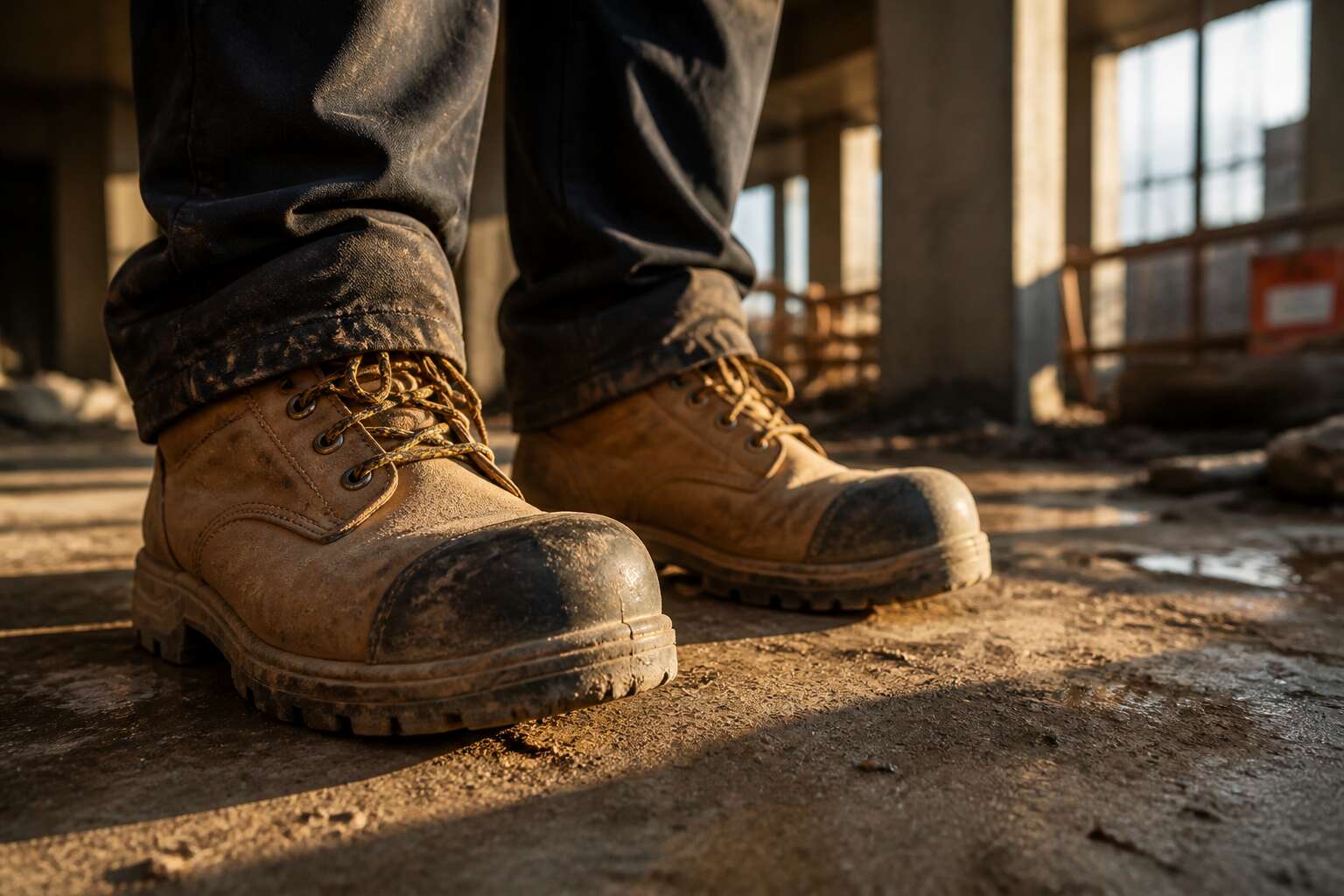
The Anatomy of Workplace Foot Hazards
Common Impact Injuries from Falling Objects
Every year, thousands of South African workers suffer crushed toes or fractured metatarsals because they skip proper footwear. The anatomy of workplace foot hazards is unforgiving: heavy pallets slip from forklifts, tools tumble from scaffolding, and steel beams swing on cranes. The foot’s delicate bones, nerves, and tendons sit beneath a thin layer of skin, leaving them exposed to blunt force trauma from falling objects. This is why safety boots are important; they provide a rigid barrier that absorbs and distributes the kinetic energy before it reaches your skeleton.
Common impact injuries from falling objects include:
- Contusions and hematomas from blunt strikes
- Fractures in the phalanges or metatarsals
- Crush injuries that damage the arch and heel
Each of these can force a worker to take months off. The impact force from a 5 kg object dropped from two meters exceeds 100 joules, enough to break bones through standard leather shoes. Why safety boots are important becomes clear when you calculate the risk: a steel toe cap and composite midsole spread that force across the entire foot, preventing the object from breaching the skin.
Puncture Risks from Nails, Glass, and Debris
Puncture wounds arrive without warning. The ground of any South African worksite conceals their instruments: rusted nails, jagged glass, twisted wire offcuts. They settle into mud, nest beneath rubble, and lurk between scaffolding planks.
- Rusted nails from old pallets and formwork
- Glass shards from broken windows
- Metal offcuts and torn wire
- Sharp stones lodged in hard ground
One misplaced step drives a nail through the sole of an ordinary shoe and deep into the arch. This is why safety boots are important. The puncture-resistant midsole, typically steel or composite, forms a barrier that foreign objects cannot breach. It distributes the sharp point’s pressure across a wider area, preventing skin penetration.
Unlike crushing impacts, puncture wounds deceive. The entry point appears small and harmless, yet the damage extends deep into muscle and tendon. Bacteria follows the penetration path, and infection sets in quietly, often surfacing only days later.
Slips, Trips, and Falls on Slippery Surfaces
A single spill can silence an entire shift. I have watched a skilled boilermaker go down on a film of hydraulic fluid, his boot losing grip in a heartbeat. The fall broke his wrist and bruised his pride, but the near misses are worse! Slips, trips and falls cause a large share of workplace injuries in South Africa each year.
The treacherous surfaces include:
- Oil and grease pooling near machinery
- Wet cement and plaster residue
- Rainwater tracked onto smooth concrete
- Fine sand or dust that rolls underfoot
This is why safety boots are important. The outsoles use deep, self-cleaning tread patterns that displace liquid and debris, maintaining ground contact. The heels absorb impact, and the ankle support stabilises the joint when the body tips. Grip is not a luxury. It is the difference between finishing the week and spending it in a queue at the clinic.
Electrical and Thermal Threats in Various Industries
Electrical and thermal threats appear in unexpected places. A welder in a Gauteng fabrication shop steps on a stray electrode. An electrician in a Cape Town substation brushes against a live busbar. The right footwear interrupts the circuit. Electrical hazard rated boots use non-conductive materials that resist current flow up to 18,000 volts. They prevent the body from completing the circuit.
Heat presents a different problem. Foundry workers in Vereeniging walk across floors where spilled metal glows orange. Standard rubber soles would melt into a sticky mess! Heat resistant outsoles handle contact with surfaces up to 300°C.
Consider the environments where these threats appear:
- Electrical utility workers dealing with high voltage switchgear
- Welders and boilermakers exposed to sparks and slag
- Foundry and smelter operators handling molten materials
Each scenario demands specific boot features. This is why safety boots are important. They are engineered barriers between your feet and the energy.
How Safety Boots Protect Your Feet
Steel Toe vs. Composite Toe Caps Explained
Steel toe caps are the traditional choice, and composite toe caps are the modern alternative. Steel absorbs a serious impact and keeps its shape, but it conducts heat and cold. Your toes freeze in winter and cook in summer. Composite caps do not conduct temperature, so your feet stay closer to normal. They also weigh less, which matters after hour six on your feet.
Here is the honest breakdown if you are choosing between them:
- Steel: maximum impact resistance, heavier, conducts heat and cold.
- Composite: lighter, non-metal, and it will not set off every security scanner.
This is exactly why safety boots are important. The right cap keeps your toes functional, and the wrong one adds a new problem. Neither cap prevents a rolled ankle, but both prevent the kind of crunch that ends your week.
Puncture-Resistant Midsoles and Their Role
The ground at a South African construction site is rarely forgiving. Rusted wire, jagged offcuts, and shards of glass often hide beneath a veneer of dust and mud. This is precisely why safety boots are important when you consider what lies beneath your feet. A standard sole offers minimal defense against a nail that has been left in a wooden plank. Puncture-resistant midsoles act as a quiet barrier, preventing such objects from driving straight through the boot and into your foot.
This protection works by integrating a flexible sheet of stainless steel mesh or Kevlar between the insole and the outsole. This layer blocks nails and debris from penetrating, while still allowing the boot to bend naturally as you walk. Without this safeguard, a simple misstep onto a piece of scrap metal can result in a severe foot injury.
The hazards are not always obvious to the naked eye. A worksite can be a maze of hidden perils, including:
– Protruding screws from discarded timber
– Sharp metal offcuts from angle grinders
– Wire strapping from pallets and bundles
– Splintered glass from broken panels
Each of these can easily breach a regular pair of boots. The cost of treating a puncture wound often vastly exceeds the price of a proper pair of boots, not to mention the loss of work time. A puncture-resistant midsole is not just a technical feature, it is a primary line of defense against the most common floor-level hazards. When exploring why safety boots are important, the protection of the foot’s underside is as critical as safeguarding the toes from falling objects.
Slip-Resistant Outsoles for Stability
When you step onto a steel plate slick with morning dew, the difference between a secure footing and a sudden fall comes down to the tread pattern and rubber compound of your safety boot. Slip-resistant outsoles use specially designed grooves and lugs that channel water, oil, and mud away from the contact surface, preserving traction where ordinary soles lose grip. I have seen experienced workers hesitate on wet concrete, and that hesitation is a signal.
These outsoles are not a luxury. Consider the typical South African worksite hazards:
- Spilled hydraulic fluid
- Wet clay after a storm
- Dust-covered polished concrete
Each of these conditions turns a stable walkway into a test of balance. A slip-resistant outsole, with its aggressive tread geometry and high-friction rubber, keeps you planted. That stability is why safety boots are important for every task, from walking the perimeter to carrying loads across a busy yard.
Electrical Hazard (EH) Protection Features
Your soles are the only barrier between you and a live circuit. A frayed extension cord on a damp factory floor can send current straight through a standard boot. Electrical hazard rated boots use non-conductive rubber compounds and insulating midsoles to block that path. They are tested to handle specific voltages. In South Africa, load shedding leads to temporary wiring and portable generators, which means exposed connections appear in unexpected places. That is why safety boots are important for anyone working near power tools, switchboards, or supply lines.
- Outsoles and heels engineered from high resistance rubber
- Insulating materials that reduce conductivity through the footbed
- Markings that certify the boot meets a recognised EH standard
Never trust a boot that looks similar but lacks the certification mark. The label is the difference between protection and an unknown risk, and that risk is why safety boots are important on every job site.
Metatarsal Guards and Ankle Support Advantages
A falling steel pipe rarely strikes the toe straight on. The force often lands across the midfoot or rolls over the ankle. That is where metatarsal guards and reinforced collars become critical. Metatarsal guards extend the protective shell further up the foot, shielding the tarsal bones when an object drops at an angle. Without them, a direct crush leads to slow healing and extended time off the job.
Ankle support works differently. A boot with a high collar and firm heel counter limits lateral roll on uneven ground. On a rough gravel site in Mpumalanga or a wet concrete slab in Cape Town, that support reduces the chance of a painful twist.
- Metatarsal guards made of hardened steel or composite materials
- Ankle padding that holds the foot securely without cutting circulation
- A heel counter that resists twisting under pressure
These features add cost, but they add protection where standard toe caps stop. That is precisely why safety boots are important when the hazard comes from rolling loads or unstable footing.
The Hidden Costs of Skipping Safety Footwear
Medical Expenses and Workers’ Compensation Claims
A single workplace foot injury can generate medical bills that eclipse the price of a quality pair of boots many times over. Emergency room visits, orthopedic consultations, and rehabilitation sessions accumulate quickly. In South Africa, the Compensation for Occupational Injuries and Diseases Act (COIDA) governs claims, yet the administrative process drains time and energy. Your company’s accident record also influences future insurance premiums.
Consider the financial ripple effects:
- Hospital and surgical fees
- Prescription medication and physiotherapy
- Lost wages during recovery
- Claim processing and legal administration costs
This is precisely why safety boots are important. One injury can cost an employer hundreds of thousands of rand in direct and indirect expenses. The cheapest pair of compliant footwear is a bargain compared to a single claim. Preventing the injury is always more economical than managing its aftermath.
Lost Productivity and Extended Downtime
Long-Term Musculoskeletal Damage and Chronic Pain
South African workers spend roughly a third of their lives on their feet, yet many treat their footwear as an afterthought. The true cost of skipping proper protection only reveals itself years later, often as a dull ache in the knees or a persistent twinge in the lower back. Unlike the immediate sting of a dropped hammer, this damage accumulates silently over thousands of shifts.
Your spine and joints act as a shock absorption system, but concrete floors and uneven terrain overwhelm them. Cheap soles and flimsy uppers offer no arch support, forcing your muscles to compensate. This creates an unnatural gait that throws your entire skeletal structure out of alignment. The result is a cascade of problems that follow you home and into retirement.
– Degenerative disc disease in the lumbar region
– Chronic plantar fasciitis that makes mornings unbearable
– Misaligned hips that lead to sciatic nerve pain
– Accelerated osteoarthritis in knees and ankles
The financial implications are staggering. Workers with chronic foot pain lose an average of 30 productive days per year, far more than those who suffer acute injuries. This quietly erodes household income while medical aids claim exhaustion. This is precisely why safety boots are important. Pairing proper shock-absorbing soles with supportive ankle collars reduces impact forces by up to forty percent. Quality boots act as preventative medicine, protecting your body’s foundation so you can keep working.
Choosing the Right Safety Boots for Your Job
Understanding Industry Standards (ASTM, EN ISO)
Selecting safety boots means matching footwear to your working conditions, not choosing the thickest sole. That approach leads to blisters and fatigue. This is exactly why safety boots are important. They must satisfy performance standards from bodies like ASTM and EN ISO. ASTM F2413 covers impact resistance, while EN ISO 20345 specifies requirements for sole penetration and antistatic properties. In South Africa, SANS 1382 aligns with these international benchmarks.
Check these points before you hand over your money.
- Identify the hazards, from falling objects to electrical risks.
- Confirm the label shows ASTM or EN ISO compliance.
- Test the fit with your usual work socks.
Standards replace guesswork with specific performance thresholds. They translate lab tests into real-world safety. When your boots meet the right criteria, you reduce the chance of injuries that disrupt your income and your health. Choosing correctly keeps you confident on any job site, which beats explaining to your boss why you are off work.
Fit, Comfort, and Break-In Considerations
Selecting the right pair of work boots often feels like a gamble, especially when you are standing in a store aisle and every option looks identical. Safety features and certifications are crucial, but the real decision hinges on how those features translate to your daily reality. A boot that fails to fit properly will compromise your posture, reduce your agility, and create friction points that turn a standard shift into a painful ordeal. This is why safety boots are important not just for protection, but for maintaining your performance throughout the day.
Comfort starts with understanding your specific foot shape and the demands of your terrain. A boot designed for flat, hard concrete will feel vastly different on uneven, muddy ground. Look for a toe box that allows your toes to splay naturally rather than being pinched together. Pay attention to the arch support, as this determines how effectively your weight is distributed when you are carrying heavy loads. Ignoring these elements can lead to foot fatigue that travels up into your knees and lower back, turning a routine task into a source of chronic strain.
The break-in period is another factor that separates a quality boot from a frustrating purchase. Even the best materials require time to mold to your unique foot shape. Expect some stiffness initially, but genuine discomfort or sharp pressure points indicate a poor match. To ease this process, wear your new boots around the house or on short errands before tackling a full work week. This gradual exposure allows the leather and internal cushioning to soften and conform, reducing the risk of blisters. Remember that a boot that hurts on day one will likely cause serious issues by day thirty.
- Try on boots later in the afternoon, as your feet naturally swell throughout the day.
- Always wear the exact type of work socks you plan to use on the job, as thick socks change the fit dramatically.
- Walk on an incline and a decline in the store to check for heel slippage and toe cramping.
- Flex the sole to ensure it offers enough pliability for the movements your job requires.
Ignoring the nuances of fit means you will likely be forced to choose between protection and practicality. A heavy boot with maximum armor might protect against impact, but if it is too heavy, it will sap your energy and slow you down. Conversely, a lightweight boot saves energy but may not offer the necessary stability for high-risk environments. The right choice balances these factors against your specific job profile. This is the core reason why safety boots are important; they need to work with you, not against you, allowing you to focus on the task at hand without distraction.
Investing time in finding the right fit is just as critical as reviewing the safety rating. Your feet are the foundation of your workday, and they bear the brunt of every step, climb, and stance. By prioritizing fit and comfort during the selection process, you ensure that your protective gear does not become a liability. This thoughtful approach helps maintain your focus and stamina, proving that the true value of safety footwear lies not just in what it protects you from, but in the confidence and comfort it provides while you work.
Boot Materials and Durability Factors
A boot’s character is written in its materials. The environment you work in dictates whether you need full-grain leather for abrasion resistance or a treated synthetic to withstand corrosive chemicals. This is part of why safety boots are important. The material directly influences the boot’s lifespan and its defence against the specific hazards of your site.
Consider the durability factors before you commit:
– Leather offers breathability and molds to the foot, but requires maintenance.
– Synthetic materials are often lighter and dry faster, but may degrade under extreme heat.
– Rubber provides a waterproof barrier, but can be heavy and retain sweat.
Look beyond the outer shell. The stitching and the method of attachment to the sole often determine the boot’s true longevity. A heat-sealed sole may offer a sleek profile, yet a welted or stitched construction usually survives harsh flexing better. Waterproofing membranes must balance protection with the need for moisture to escape; a boot that traps sweat creates its own problems over a long shift. Choosing the right material is a calculation. One that weighs your specific risks against the daily wear and tear on the job. That calculation underpins the protection you bring home every evening.
Ankle Support and Ergonomic Design
A twisted ankle ends more shifts than any machine failure. Your foot moves in three planes, and a boot that ignores this complexity leaves you exposed. Ankle support stabilises the joint, preventing the rolling motion that leads to ligament tears. Ergonomic design respects your body’s natural alignment.
I have seen too many workers sacrifice their knees because they chose looks over support. A well built boot cradles the heel, supports the arch, and allows the toes to spread. This reduces fatigue across a long day.
- A stiff heel counter stops unexpected lateral movement.
- Adjustable lacing distributes pressure evenly across the midfoot.
- A flexible toe spring reduces trip hazards when walking on rock.
Each component serves a specific purpose. When the boot works with your gait, you focus on the task, not the ground beneath you. That is the practical value of why safety boots are important.
Seasonal and Weather-Specific Features
The weather in South Africa rarely stays still. A single week can bring a pounding Highveld storm, a freezing Karoo morning, and a sweltering coastal afternoon. Your boots have to handle all of it. Choosing the right pair for the season is about more than comfort; it is about keeping your feet functional and protected when the environment turns against you.
For the scorching summer months, breathability is your first priority. A leather boot with a waterproof membrane might sound durable, but it can turn your feet into ovens on a 35-degree day. Look for options with mesh panels or unlined interiors. They allow air to circulate, reducing sweat and the risk of blisters. In contrast, the wet season demands a different approach. A sealed, waterproof construction is non-negotiable. Slipping on a muddy incline or standing in a puddle all day compromises your safety and your health. Insulated liners are worth considering for the chilly winter months in Gauteng or the Cape, trapping warmth without adding excessive bulk to the boot.
Regardless of the climate, a seasonal switch should never sacrifice core safety. The sole and toe protection remain your primary shields. When selecting for wet weather, check for a sole with deep, aggressive treads. In heat, ensure the lightweight design still meets the necessary impact standards. For cold, verify that the insulation does not compress the internal space, which could restrict toe movement.
Here are a few points to remember when adapting your footwear to the forecast:
– Hot and Dry: Prioritise moisture-wicking socks and unlined leather to prevent overheating.
– Wet and Windy: Insist on full waterproofing with sealed seams and a high-cut ankle to keep water out.
– Cold and Frosty: Select a boot with thermal insulation but a non-slip outsole to handle icy patches.
Ultimately, your feet are the only tool you use every single minute of the shift. Dressing them for the weather is a practical part of your job. It keeps you agile, comfortable, and safe. This seasonal awareness is a large part of why safety boots are important for long-term health, ensuring you are prepared for the elements as much as you are for the hazards on the ground.
Specialized Options for Welding, Construction, and Warehousing
A welder’s boot is built around heat. The uppers use full-grain leather with Kevlar stitching, and a gusseted tongue stops slag and sparks from slipping through the eyelets. In trades where a single drop of molten metal can injure a foot permanently, this is why safety boots are important.
Construction sites demand a beefier build. A reinforced heel counter absorbs shock when you drop from scaffolding, and a scuff cap on the toe resists abrasion from kneeling on rebar. Warehousing shifts the priorities. You spend eight hours on concrete, so a lightweight boot with a cushioned midsole and flexible outsole matters more than bulk.
Review these warehouse specifications:
- Energy-absorbing heel inserts to reduce fatigue
- Nitrile rubber outsoles that grip polished floors
- Wide-fit options that accommodate orthotics
Each role proves that the right boot depends on your daily hazards, not the certification sticker on the box.
Beyond the Job Site – Everyday Benefits of Safety Boots
Improved Posture and Reduced Fatigue
Many workers slip into their safety boots for the morning commute, but they rarely consider how that footwear carries them through the evening and into the weekend. The human frame is a connected system of muscles, tendons, and skeletal structures. When you spend eight or more hours on a concrete slab, the shock absorption and arch support of a quality boot work hard to keep the lumbar spine and hip alignment in a neutral position. That stability carries over to all facets of daily life. You still get the support you need when you are standing at a braai, walking the dog, or pushing a trolley through a busy grocery store.
The impact on your energy levels is noticeable. A well constructed boot reduces the constant micro adjust that your body performs to remain upright, which is a leading source of lower back tension. The correct outsole flex and set heel height encourage a more efficient stride. That efficiency means your legs do not work overtime to stabilise your gait, so you finish the day with a reserve of energy for personal tasks.
– Reduced strain on the Achilles tendon during incline walking.
– A more controlled stride on uneven suburban pavements.
– Less lower back discomfort when standing for long durations.
Choosing the right pair is a decision that goes beyond compliance with the health and safety department. It is an investment in your daily biomechanics and long term physical resilience. This is why safety boots are important for every hour you spend on your feet, not just the ones logged on the time clock. Selecting the right footwear changes your posture and your overall sense of well being, which supports a more active and comfortable life outside of work hours.
Protection for DIY Projects and Outdoor Work
Around 40% of disabling workplace injuries happen at home or during leisure activities. This statistic grabs attention because most people hang up their boots the moment they punch out. Yet the weekend brings its own hazards. A loose roof tile, a fallen branch after a storm, or a pallet of bricks stacked haphazardly in the garage. These scenarios demand the same protection you rely on Monday to Friday. This is precisely why safety boots are important beyond the factory floor.
Think about your last DIY project. Did you climb a ladder to clear the gutters? Did you move heavy bags of compost across a wet lawn? Each task introduces the risk of a dropped tool or a misplaced foot. The reinforced toe cap that shields against a falling steel beam works just as effectively against a swinging hammer. The puncture-resistant sole that deflects a stray nail on a construction site will also stop a rusty tack hiding in the grass. Wearing the right footwear during these chores is not about paranoia. It is about maintaining your ability to enjoy your time off without a trip to the emergency room.
The benefits extend to physical endurance as well. A supportive ankle collar and a shock-absorbing insole reduce the strain on your joints when you spend hours on your feet at a music festival, a weekend market, or doing yard work on a hot Saturday. Instead of feeling drained by four o’clock, you experience less fatigue in your calves and lower back. This practical advantage shows why safety boots are important for anyone who values their free time. They allow you to transition from a demanding work week into recovery and recreation, rather than trading one source of exhaustion for another.
– A sturdy shank supports your arch during long walks on uneven trails.
– A grippy rubber outsole provides traction on wet driveway surfaces or slippery boat ramps.
– A waterproof membrane keeps your feet dry during morning hikes through dewy grass.
These features transform a piece of personal protective equipment into everyday footwear. A quality pair meets the same safety standards that protect you at a construction site while offering the comfort required for a full day of errands. You no longer need to leave your protection in the work locker. Whether you are painting a fence, fixing a car engine, or walking the dog through a nature reserve, the fundamental principles of foot safety remain constant. That consistency in protection is why safety boots are important, and it is what makes them a smart choice on any day of the week.
Long-Term Cost-Effectiveness and Durability
Price per wear matters. A flimsy sneaker crumbles after a season. A safety boot with reinforced stitching and a replaceable sole endures years of daily use. The math favors the sturdier option. You spend more upfront, then forget about replacements.
- Resoling worn treads restores traction.
- Conditioning leather keeps the upper supple.
- Replacing insoles extends comfort.
These low-cost habits explain why safety boots are important for your budget. They turn a single purchase into a long run of reliable protection.

0 Comments