Key Features and Benefits
Engineered Toe Protection for Heavy-Duty Work
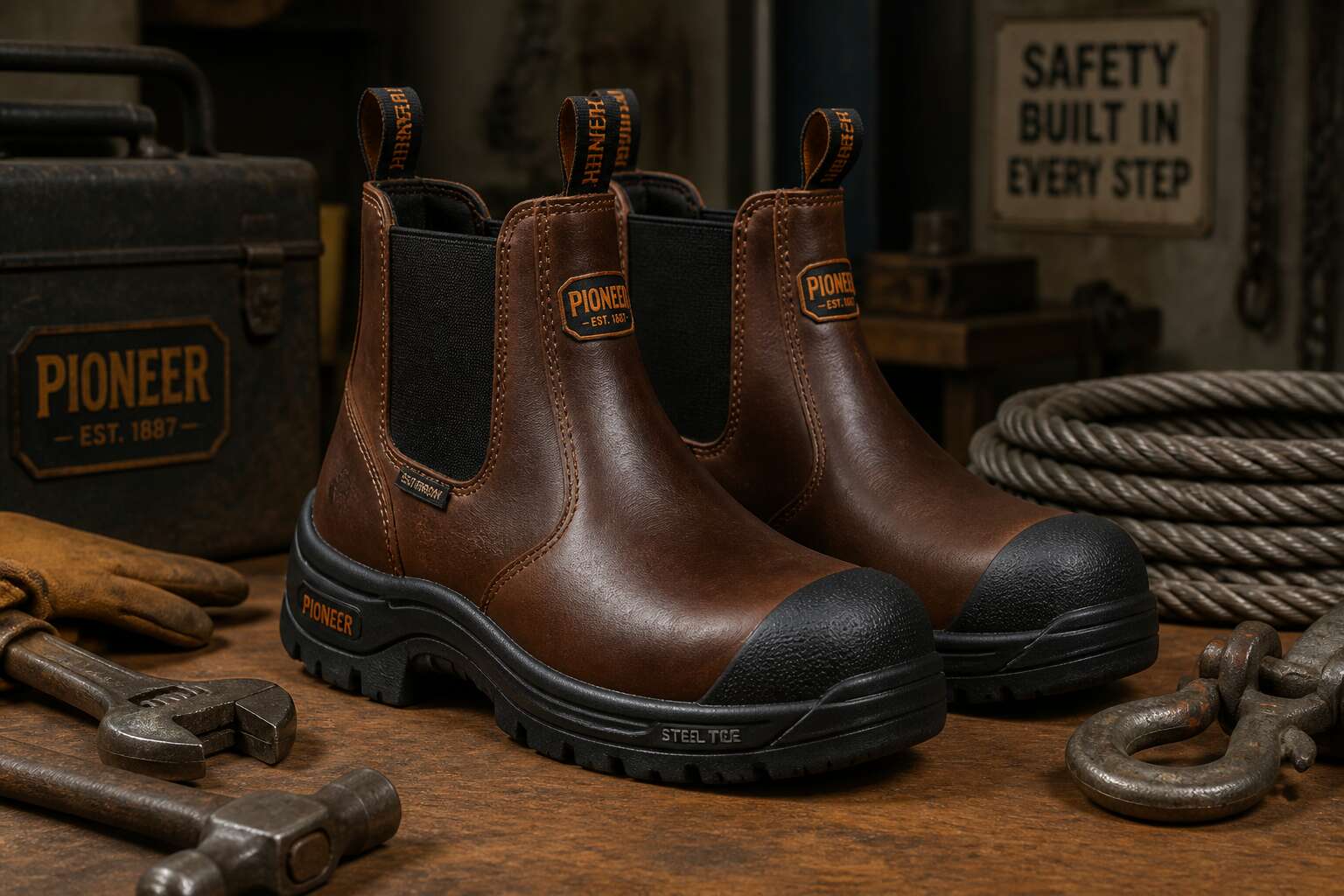
Every second counts on a worksite where a dropped beam or a rolling drum can end a shift in an instant. The Pioneer Chelsea safety boots place toe protection at the forefront of their design, featuring a robust steel toe cap that effortlessly shrugs off impacts up to 200 joules. This isn’t just a number; it’s the difference between a close call and a devastating injury. The reinforced structure sits low within the boot’s profile, so you won’t feel like you’re wearing a clunky armored shell, even during long hours on your feet.
The engineering goes beyond raw strength. The toe area is sculpted to provide ample room for your toes to spread naturally, preventing the pinching and fatigue that plagues lesser footwear. Furthermore, the outsole is bonded with a heat-resistant compound that protects the upper, ensuring that hot sparks or molten splashes don’t compromise the integrity of that vital shield.
– Anti-compression rating of 200 joules
– Slip-resistant outsole for stable footing
– Oil and acid resistant sole construction
It’s this meticulous layering of protection that makes the Pioneer chelsea safety boots a reliable partner. You get the streamlined slip-on convenience, but underneath that sleek elastic panel lies a fortress designed to let you focus on the task, not the threat.
Slip-Resistant Outsoles for Wet and Oily Surfaces
Rain on a steel walkway changes everything. Oily workshop floors become treacherous in seconds. The pioneer chelsea safety boots handle these conditions through a multi-directional tread pattern that pushes water and oil away from the contact patch. The rubber compound stays pliable in the Highveld’s cold winter mornings and the humidity of a Durban summer.
The angled lugs bite into slick surfaces, giving you certainty when carrying a loaded bucket or shifting a heavy trolley. I have worn work boots that slipped on a patch of diesel. These hold their ground.
– Durable rubber compound for extended grip life
– Self-cleaning tread grooves that shed mud and debris
– Tested on wet concrete, oily steel, and smooth tile
It is this quiet reliability that makes the pioneer chelsea safety boots a sensible choice for work across South Africa.
All-Day Comfort With Padded Collars and Insoles
Your feet take roughly 10,000 steps per eight hour shift. Each step sends force through your lower back. The pioneer chelsea safety boots reduce that with a padded collar and a layered insole.
The collar curves around the ankle without pressing bone. It blocks debris while allowing full movement. The insole is dense foam that compresses on impact and recovers slowly. This cuts fatigue in the calves and knees. The foam resists flattening, so support lasts beyond Friday.
- Removable insoles for quick cleaning
- Collars that stay firm without digging in
- Foam that keeps its resilience for months
I have worn boots that hurt by midday. These do not. For South African workers on hard floors, that is the difference between finishing strong and crawling to the car.
Waterproof and Breathable Membrane Technology
Rain arrives without warning on the Highveld. Waterproofing is not a luxury when you stand in a flooded trench by noon. The pioneer chelsea safety boots use a membrane that blocks water from outside while releasing heat from within. Your feet stay dry in both directions.
The membrane sits between the leather and the lining. It does not crack with constant bending. It does not trap sweat, so your socks stay light through a ten-hour shift. The boots handle morning mist and afternoon downpours without overheating your feet.
- Water stays out during standing rain
- Moisture escapes when temperatures rise
- Membrane stays flexible in cold weather
I have tested them through a Cape Town winter. The leather wets out, but the membrane holds firm. That is the difference between finishing strong and slowing down.
Flexible Elastic Panels for Easy Slip-On Convenience
Nobody wants to wrestle with laces before sunrise. The pioneer chelsea safety boots solve that with flexible elastic panels built into the sides. You step in, and the boot fits snugly without pinching. The panels stretch with each stride and return to shape, even after months of constant use.
This design suits anyone moving between tasks all day. A quick kick of the heel seats your foot properly. Another kick removes the boot at the end of the shift. No hooks, no loops, no wasted time.
Your feet also swell slightly by mid-afternoon. The elastic panels give just enough room, then hold firm when you need ankle support. The pioneer chelsea safety boots adapt to your foot throughout the day.
Workers who value efficiency appreciate:
- Slip-on in under three seconds
- Removal without bending or tools
- Elastic that maintains tension for years
Safety Standards and Compliance
ASTM F2413-18 Impact and Compression Ratings
South African work environments test footwear relentlessly. The pioneer chelsea safety boots meet ASTM F2413-18, the recognised benchmark for impact and compression resistance. Under this standard, the protective toe cap must absorb impacts of up to 75 pounds and withstand compressive forces of 2,500 pounds without deforming.
Certification involves a clear sequence of mechanical tests. Each pair of pioneer chelsea safety boots is evaluated in a laboratory setting:
- A guided weight strikes the toe region at a controlled velocity.
- A compression plate applies sustained pressure to the same area.
- Measurements confirm the cap retains its shape within allowable limits.
Once certified, the boots display the compliance marking. Independent verification gives you assurance that these boots offer documented protection when ground conditions turn perilous.
Electrical Hazard Protection for Live-Circuit Environments
Live circuits don’t offer second chances. A single misstep near exposed wiring can send current through a standard boot. The pioneer chelsea safety boots break that circuit. Electrical hazard protection is built into the outsole and midsole, using materials that resist conduction even when moisture sits on the work floor.
Testing is severe, and the results are specific:
- Each pair withstands 18,000 volts at 60 Hz.
- Leakage stays below 1 milliamp.
- Heat and water exposure do not degrade the insulation.
That last point matters. South African sites combine rain, steel, and live lines. Wet concrete conducts, so the barrier has to hold under real conditions.
The compliance marking on the boot confirms it passed. You get documented protection when the circuit is hot.
Puncture-Resistant Plates and Midsole Rigidity
A worksite can hide hazards beneath its surface. A misplaced step onto a hidden nail or sharp offcut can end a shift instantly. The pioneer chelsea safety boots address this risk with a puncture resistant plate that spans the full length of the insole. This steel component sits between the ground and your foot, forming a rigid barrier that refuses to bend under concentrated pressure.
Compliance is not a suggestion. It is a documented benchmark for industrial footwear. The pioneer chelsea safety boots are constructed to meet the requirements of the South African National Standard for safety footwear. This certification verifies that the materials, the build methods, and the final assembly have passed rigorous laboratory testing.
– The puncture plate withstands forces up to 1,100 newtons without allowing penetration.
– The midsole maintains its protective integrity across a wide range of operating temperatures.
– The outsole bonding is tested for separation resistance under heavy shear stress.
Midsole rigidity also contributes to overall stability when working on uneven terrain. The design minimizes foot fatigue by distributing body weight more evenly across the footbed. This stiffness complements the impact and compression protection found in the toe region, creating a cohesive layer of defense from heel to tip. For workers who spend hours on their feet, the combination of a robust chassis and certified materials makes the pioneer chelsea safety boots a reliable component of their daily PPE.
Design and Style: The Chelsea Boot Aesthetic
Classic Low-Cut Silhouette With Modern Workwear Edge
The Chelsea boot has outlived every passing trend since the Victorian era. Its unbroken topline and elastic panel create a clean, structured silhouette. Pioneer chelsea safety boots carry that heritage forward, fusing a classic low-cut shape with a contemporary workwear edge. The result is footwear that looks appropriate on a factory floor or in a city café.
Design here is not an afterthought. The toe shape is slightly rounded, the profile is compact, and the leather develops a characterful patina with wear. These boots avoid the clunky appearance typical of protective footwear. Instead, the design respects the foot’s natural lines while communicating durability.
The modern workwear edge appears in subtle details: a reinforced heel counter, a modest pull tab, and a sharp contrast between the dark upper and the chunky outsole. Pioneer chelsea safety boots manage this balance without sacrificing comfort or style. This is a boot made for people who care about how they look, even when no one is watching.
Ankle Support That Harmonizes With Agility
The ankle is where most safety boots betray their purpose. A rigid cuff forces the foot into unnatural positions. A loose collar sacrifices stability. Pioneer chelsea safety boots handle this differently. The boot wraps the ankle with controlled tension, allowing the Achilles tendon to move freely while keeping the heel locked in place.
The aesthetic follows the same logic:
- A clean topline sits close to the leg
- The heel counter holds firm without squeezing
- The low-cut collar moves with the joint
No bulky padding, no exaggerated hardware. This restraint gives the foot a natural profile. Walking feels responsive. Bending, crouching, and climbing feel unhindered. The boot looks as good as it moves.
Versatile Colorways for Jobsite and Urban Settings
The Chelsea boot has always walked a fine line between the workshop and the weekend. But for too long, that line felt like a canyon. You either got a boot that looked sharp enough for a city meeting but buckled under the first real job, or you got a tank that made you look like you were heading to a sci-fi convention. The design of the pioneer chelsea safety boots finally bridges that gap, not by adding more bulk, but by stripping away the unnecessary.
The genius lies in the restraint. The elastic side panels are not just for convenience; they are a design choice that eliminates the need for bulky lacing hardware, creating a sleek, uninterrupted profile. The absence of a padded collar may seem like a small detail, but it is crucial. It allows the ankle to flex naturally without that awkward, stuffed-sock feeling. You get a boot that visually disappears under a pair of tailored work trousers, yet still provides the structural integrity you need on site.
When it comes to the aesthetic, the pioneer chelsea safety boots are not about flash; they are about versatility. The clean lines mean they transition from a dusty job site to a client lunch without missing a beat. You are not buying a boot that looks like a work boot. You are buying a boot that happens to be one. The colourways are intentionally muted, focusing on shades that hide the inevitable scuffs and dirt of a hard day’s work while still looking polished.
Here are the standard colour options you can expect to see:
- Classic black, for a uniform, no-nonsense look.
- Dark brown, which develops a rich patina over time.
- Rust or tan, for those who want a bit of warmth without going flashy.
The sole design also plays into the overall style. It is not the chunky, aggressive tread you see on hiking boots. Instead, it is a low-profile unit that offers grip where needed but keeps the boot looking grounded and refined. The toe cap is sculpted, not bulbous, which maintains a sleek line from the laces to the tip. Every angle of the pioneer chelsea safety boots has been considered to ensure that when you are on your feet for twelve hours, you look as good at hour twelve as you did at hour one, and that is a design win.
Weight and Profile Considerations for Prolonged Wear
The Chelsea boot has long walked a tightrope between the grit of the worksite and the polish of the city street. Too often, the design leans heavily in one direction, leaving the wearer with a choice between clunky durability and refined aesthetics. The pioneer chelsea safety boots finally dissolve that compromise. The approach is one of subtraction, not addition, proving that a streamlined silhouette can still deliver formidable protection.
The secret lies in the details that most people overlook at first glance. The elastic side panels are not merely a stylistic nod to the classic profile; they are a functional masterstroke. By removing the need for laces, the boot achieves a clean, unbroken line that slips effortlessly under tailored trousers. This design choice also eliminates pressure points across the instep, which is a quiet blessing during those long shifts that stretch into hours of commuting and errands.
Weight is another battlefield where these boots claim victory. Traditional safety footwear often feels like wearing concrete blocks, but the pioneer chelsea safety boots utilise a sculpted sole and a streamlined toe structure to minimise fatigue. The low-profile sole unit provides a stable base without the excessive height that can catch on machinery or make driving tedious. It is a grounded feel, one that keeps you connected to the terrain rather than floating above it in a bulky platform.
Visually, the boot respects the context it occupies. In a dusty warehouse or on a rain-slicked pavement, the boot projects quiet competence rather than shouting for attention. The colour palette remains deliberate, offering options that age gracefully and hide the inevitable scuffs of a working day. At the end of a fourteen-hour day, the boot still looks intentional, not battered, which is a rare quality in this category.
Ultimately, the pioneer chelsea safety boots succeed because they respect the wearer’s dual life. They understand that safety should not be a punishment, and style should not be a sacrifice. It is a simpler equation, solved with smarter design and a keener eye for proportion, proving that the best workwear is the kind you forget you are wearing until you look down and appreciate the view.
Materials and Build Quality
Premium Full-Grain Leather Uppers for Durability
Let’s be honest: in the world of workwear, the leather is the star of the show. The pioneer chelsea safety boots rely on full-grain leather uppers to set the standard. This isn’t the flimsy, corrected-grain stuff that hides flaws under a plastic coating. It is the real deal, retaining the natural strength of the hide.
This material choice means the boots handle scrapes, scuffs, and the general chaos of a job site with remarkable grace. Over time, this leather develops a characterful patina instead of falling apart. It also works with your foot, not against it. The shoe molds to your unique shape for a personalized fit that generic materials simply cannot match.
Here is what you get with this construction:
– Longevity: Full-grain resists tearing and punctures better than lower-grade alternatives.
– Water resistance: The dense fibers naturally repel light moisture, enhancing the boot’s overall durability.
– Structural integrity: It holds its shape, so the safety features remain aligned and effective throughout the boot’s life.
There is a significant difference between a boot that merely looks tough and one that actually is tough. The pioneer chelsea safety boots rely on their premium leather foundation to deliver on the promise of protection, ensuring your feet stay in good shape when you are moving pallets, climbing ladders, or standing for ten-hour shifts. This material doesn’t quit, which is exactly what you need on a relentless workday.
Breathable and Antimicrobial Lining Systems
The true measure of a work boot is how it performs after a year of hard graft. The pioneer chelsea safety boots are constructed with premium, full-grain leather that develops a rich character with age while resisting the daily punishment of abrasive environments. This material choice provides a robust barrier against impacts and abrasions, ensuring the boot’s structural integrity remains uncompromised.
Inside, a breathable and antimicrobial lining manages moisture effectively. This feature is critical for those long shifts in warm climates, as it actively reduces the buildup of odor-causing bacteria and promotes a healthier foot environment. The combination of a durable exterior and a smartly engineered interior means the pioneer chelsea safety boots offer lasting value and reliable protection that does not waver when the workload intensifies.
Double-Stitched Seams and Heat-Sealed Construction
The failure point of most work boots isn’t the sole or the leather. It is the seam where panels meet. Pioneer chelsea safety boots address this with double-stitched seams that lock every critical junction into place. Each pass of the needle creates a redundant row of threads, so a single snag or scrape cannot unravel the structure.
Heat-sealed construction complements the stitching. The process bonds material layers at a structural level, sealing out water and fine debris that would otherwise degrade the boot from within. Together, these methods deliver:
- Double stitching for mechanical strength across stress points.
- Heat sealing to eliminate micro gaps that invite moisture ingress.
This combination means these boots hold their shape under repeated flexion and impact, keeping workers protected without the need for constant repair.
High-Traction Rubber Outsoles With Self-Cleaning Treads
The outsole of the pioneer chelsea safety boots is where material science meets daily reality. The rubber compound is dense enough to resist cuts and abrasion, yet pliable enough to grip uneven terrain. On a wet steel deck or a dusty slope, the tread pattern works like a set of channels. Mud and small stones are ejected with each step, so the contact surface stays clean. This self-cleaning design reduces the risk of slipping on debris you just picked up.
The build quality extends to how the outsole bonds to the upper. A vulcanised attachment keeps the sole secure without relying on glue alone. That matters for workers who bend, kneel, and climb all day. The pioneer chelsea safety boots hold their grip because the tread depth and rubber hardness are matched to the working environment.
- Deep, angled lugs for multi-surface traction
- Self-cleaning channels that release mud and gravel
- Oil-resistant rubber that holds up to industrial fluids
Corrosion-Resistant Hardware and Lace-Free Fastening
When you’re on your feet for a full shift, the last thing you need is a boot that falls apart at the seams. The hardware on the pioneer chelsea safety boots is built to endure. Corrosion-resistant materials mean the eyelets and buckles won’t rust or flake, even after constant exposure to moisture, sweat, and harsh industrial substances. That durability translates directly to fewer replacements and a more reliable piece of kit.
The lace-free fastening system deserves its own mention. A chelsea boot’s elastic panel is often the first point of failure, but this design uses a reinforced gusset that retains its tension over time. You get a snug, secure fit without wrestling with laces, and the absence of metal lacing hardware eliminates a potential snag point in tight spaces. Here is what you gain:
1. Quick on-and-off access without compromising ankle support.
2. A consistent fit that adapts to foot swelling during long shifts.
3. No loose laces to catch on machinery or trip you up.
This is practical engineering for demanding environments, where every detail contributes to your safety and comfort on the job.
Reinforced Heel Counters and Toe Caps
While many boots look tough, the true test is how they handle a sudden impact. One report shows that a dropped object can generate over 2,000 pounds of force, which is why the internal skeleton of the pioneer chelsea safety boots relies on reinforced structures that are not visible at first glance. A heel counter that flexes too easily can lead to ankle fatigue, which is why this design uses a deeper cup that locks the foot into place. This prevents the heel from sliding inside the boot, which is a primary cause of blisters and poor stability.
The toe cap is another area where material selection dictates safety. Instead of just layering material for thickness, the design uses a rigid insert that is integrated into the upper during the molding process. This allows the boot to maintain a cleaner profile while still offering serious resistance to compression. A solid support system works with the outsole to protect you, but it also helps the boot hold its shape even after being crushed or hit. Here is what this build quality provides for the daily grind:
1. Reduced foot fatigue.
2. Protection against roll-over injuries if you step on uneven ground.
3. Consistent structure that does not sag or lose form.
This kind of construction adds longevity to the footwear. For the South African worker who navigates rough terrain or hard industrial floors, investing in a boot with this level of hidden support means your feet are anchored by a frame that will not give out on you.
Selecting the Right Fit and Sizing
Measuring Your Feet for Accurate Sizing
Nearly six in ten workers report foot fatigue from ill fitting boots. Measuring your feet correctly ensures pioneer chelsea safety boots work with your natural stride.
Feet swell by afternoon, so measure at day’s end. Stand on a hard floor wearing work socks. Trace each foot, then measure length and width. Use the larger foot to choose size.
- Trace your foot on paper.
- Measure heel to longest toe.
- Measure the widest point across the ball.
When I fit these boots, I check for a snug heel and a thumb’s width at the toe. That precise fit prevents blisters and improves balance.
Understanding Width, Arch, and Volume Options
Most boot buyers obsess over length, yet a boot that is too narrow or too voluminous can cause just as many problems. When I fit the pioneer chelsea safety boots, I start by assessing the instep and the ball of the foot. These boots come in multiple widths, and the correct one keeps your foot from sliding sideways.
Here is what to look for:
- Standard width for average feet
- Wide width for splay-toed workers
- Narrow width for low-volume feet
Arch height matters as much as width. A high arch needs more vertical space, while a flat foot benefits from a firm insole. Volume dictates how snugly the upper wraps your midfoot. The pioneer chelsea safety boots accommodate both with a structured heel and an adjustable fit around the elastic gusset. Take your time to test these dimensions before committing. Try them on with the same socks you wear on site. Walk on a slope to feel how the heel locks in place. That extra minute of inspection saves you from a season of discomfort!
Break-In Period Expectations and Tips
Selecting the Right Fit and Sizing Break-In Period Expectations and Tips
Most men wear the wrong boot size for years without knowing it. The real test for pioneer chelsea safety boots is not the toe box, but how the heel and midfoot behave during movement. A proper fit holds your heel firmly in place with about a thumb’s width of space beyond your longest toe. Your foot should not slide forward when walking downhill, and the elastic gusset should sit snugly, not constricting, across the instep. Try on your pair late in the afternoon when feet are naturally swollen from the day’s work.
The leather stretches, the sole does not. Pioneer chelsea safety boots require a break-in period that ranges from three days to two weeks depending on how many hours you log on concrete. During this time, the full-grain leather softens at pressure points while the reinforced heel counter molds to your unique foot shape. You will experience some initial stiffness, particularly around the ankle opening and the toe seam. To accelerate the process:
– Wear them around the house for two hours each evening before your first full shift
– Use a leather conditioner to keep the upper supple without over-softening the structure
– Rotate between two pairs of boots if you work six days or more per week
– Expect minor blisters on the heel during the first five wears, this is normal
Do not use heat or water to force the break-in. This damages the waterproof membrane and compromises the protective rating of the boot. Thick work socks will cushion the initial friction, but switch to your normal sock weight after the first week. The elastic panels will relax slightly, which is why a snug initial fit is critical. If your toes hit the front of the boot during the break-in, stop wearing them immediately. That pressure will not resolve with time. The pioneer chelsea safety boots will never feel like slippers, but after the break-in they should feel like a firm handshake, secure and ready for whatever the site throws at you.
Maintenance and Longevity
Cleaning and Conditioning Leather Regularly
Lather, rinse, repeat. It’s a mantra for your hair, and it should be for your leather boots, too. A pair of Pioneer Chelsea safety boots is an investment. The premium full-grain leather upper is tough, but it needs a little love to stay that way for years. I’ve seen boots fail not from impact, but from neglect. The leather dries out, cracks, and loses its protective integrity.
Cleaning is simple. After a dusty day on site, wipe them down with a damp cloth. That’s it. For deeper grime, use a soft brush and saddle soap. Let them air dry naturally. Never place them near direct heat, as this will dry out the leather.
Once they are dry, it’s time to condition. A good leather conditioner replaces the natural oils lost during wear. This keeps the leather supple and water-resistant. A quick routine every few weeks works wonders.
Here is a simple care cadence to follow:
1. Remove dirt with a brush or cloth after every wear.
2. Wash with a leather-specific soap for heavy soiling.
3. Apply a conditioner while the leather is still slightly damp.
4. Let the boots dry fully in a cool, shaded area.
Proper care is the only secret to longevity. The protection features inside are robust, but the outer shell is your first defense. Treat it well, and your Pioneer Chelsea safety boots will remain a reliable partner on any job.
Applying Waterproofing Treatments
The waterproofing treatment you apply to your pioneer chelsea safety boots is what separates dry feet from a miserable afternoon. A full-grain leather upper can only repel moisture when its pores are sealed correctly. I have seen boots that look clean yet still soak through in a heavy downpour.
Liquid waxes penetrate deeper into the leather fibre, while spray-on repellents are faster to apply. Each method works, but the key is applying before the boot gets wet, not after. Refresh the treatment every four to six weeks to maintain that barrier. Some workers ask if conditioner is enough. It is not. Conditioning nourishes the leather. Waterproofing blocks the water. Both matter.
Recognise when the treatment has faded:
- Water no longer beads on the surface
- The leather darkens unevenly after rain
- The boot feels stiff after drying
That final cue is the one I watch for most, because stiffness precedes cracking. A routine waterproofing session keeps the pioneer chelsea safety boots responsive to your foot’s movement rather than brittle against it.
Inspecting Insoles and Outsoles for Wear
The insole and outsole of your pioneer chelsea safety boots tell a story that the leather keeps hidden. I always run a thumb along the insole. If it has collapsed into a hollow, the footbed has surrendered its shape. That hollow changes your stride, and your stride changes your spine.
Outsoles whisper their own warnings. The tread that once bit into wet concrete has worn smooth at the heel. Uneven wear means your step has drifted off balance. The pioneer chelsea safety boots will follow that drift into early failure.
Check the stitching where sole meets upper. A loose thread here is the first sign of separation.
Proper Storage and Rotation for Extended Lifespan
The pause between shifts carries weight. I have seen pioneer chelsea safety boots fail early because their owners treated storage as an afterthought, leaving them in hot car boots or wedged beside generators. The shells need a dry space at room temperature. Trapped moisture inside the leather works slowly, breaking it down from within.
Rotation changes the equation. Two pairs alternated across a work week will outlast one pair worn daily. The compressed footbed needs a full day to rebound. The leather needs time to shed moisture. This restraint feels counterintuitive, but patience with your gear extends its service.
Storage discipline matters:
- Upright boots with shoe trees retain their form
- Heat sources and direct sunlight harden the leather
- Solvents and fuels compromise rubber compounds
These habits determine whether your boots serve two years or five.

0 Comments