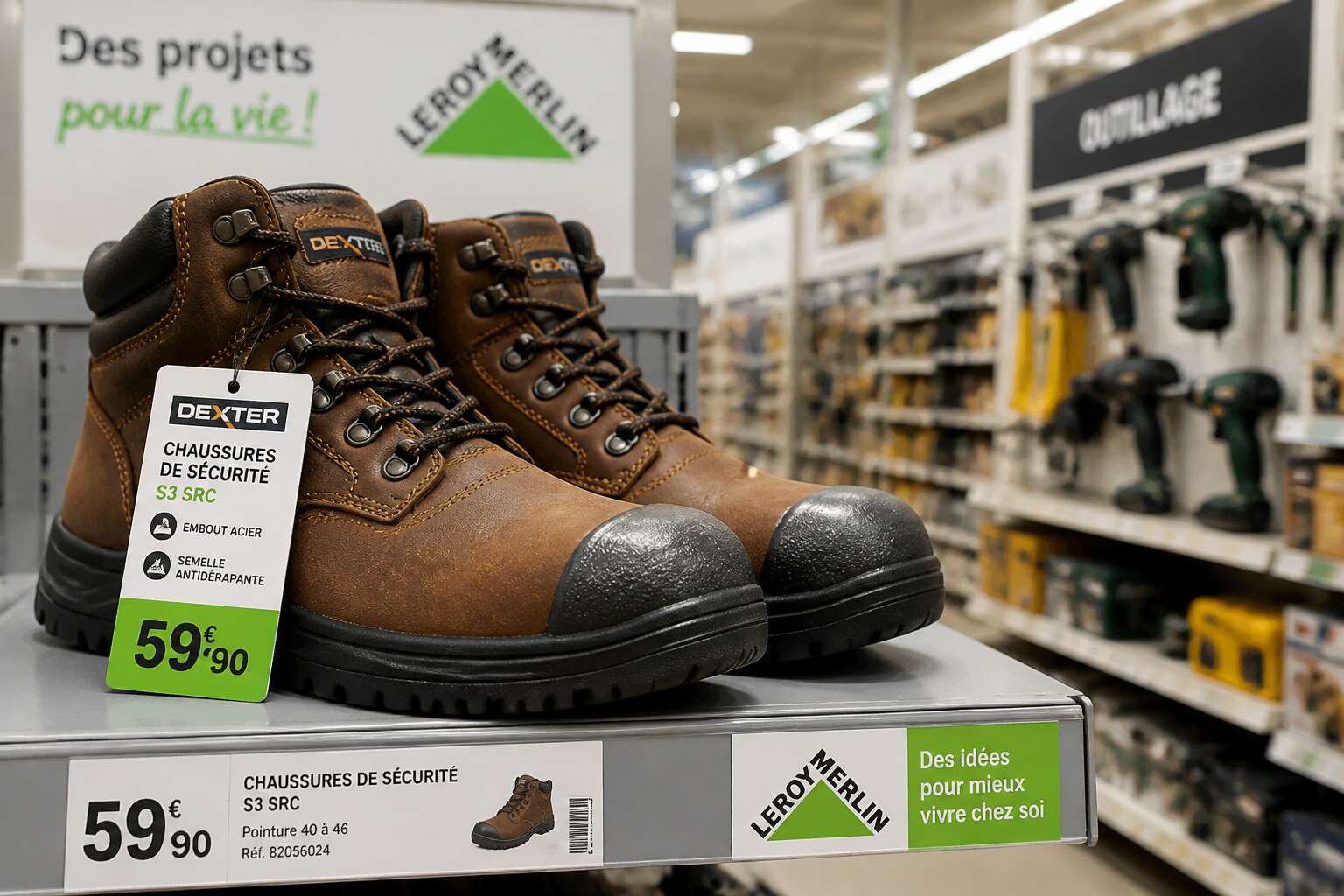
Understanding Safety Boot Standards and Certifications
The Importance of EN ISO 20345 Compliance
Most South African workers don’t know that one in three foot injuries happens because the boot label lies. EN ISO 20345 compliance is the only thing standing between your toes and a forklift. When you browse safety boots leroy merlin, check for the marking that proves a boot can survive 200 joules of impact. Without this standard, you are just buying a leather sneaker with a thick sole.
The standard mandates several things:
- Toe cap impact resistance
- Anti-static properties
- Sole penetration resistance
- Heel energy absorption
Look for the shield symbol on your next purchase. In South Africa, uncertified boots flood the market. A cheap price often means skipped testing. The stamp matters more than the salesman.
Breaking Down Safety Classes S1 to S5
The difference between a boot that saves your foot and one that merely decorates it hides in a single letter. Safety classes S1 to S5 are not marketing codes. They are graded levels of protection, each one built for a distinct hazard profile.
When you compare safety boots leroy merlin, you will see these markings stamped on the shaft. S1 means basic protection with antistatic properties and heel energy absorption. S2 adds water resistance. S3 brings sole penetration resistance and a cleated outsole for wet terrain. S4 and S5 apply to fully rubber boots, with S5 adding penetration resistance.
- S1: antistatic, energy absorbing heel
- S2: S1 plus water resistance
- S3: S2 plus penetration resistance
- S4: rubber boot, basic
- S5: rubber boot, penetration resistant
That ladder matters in South Africa. A workshop floor slick with oil and scattered screws demands S3, not S1. The grading system forces manufacturers to test each layer, and that testing is what separates certified protection from a painted label. Choosing safety boots leroy merlin means reading those letters like your feet depend on them, because they do!
Toe Cap Materials: Steel, Aluminum, and Composite
In the toe cap arena, steel, aluminum, and composite each make grand promises. Steel offers brute force but conducts cold and electricity. Aluminum flatters with lightness yet disappoints under severe impacts. Composite stays warm and non-conductive, but cracks when sharp edges strike. Browsing safety boots leroy merlin means deciding which compromise you favour.
The certification process measures a controlled blow at a single spot. A 200 joule impact from a test rig follows a precise path. The workshop floor follows none.
– Steel: durable, heavy, conducts temperature
– Aluminum: lighter, medium protection
– Composite: non-conductive, cracks under piercing blows
The standard certifies the outcome. The manufacturer decides the margin. That is why two pairs of safety boots leroy merlin with identical markings feel entirely different on site.
Sole Protection: Antistatic Properties and Slip Resistance
Slips and trips remain the most common cause of non-fatal workplace injuries across South African industries, yet most buyers inspect the toe cap before ever turning the safety boots leroy merlin over. The sole carries its own certification burden, hidden within EN ISO 20345.
Antistatic properties require a resistance range between 0.1 and 100 megaohms. This drains static buildup without turning the boot into an insulator. Slip resistance uses SRA, SRB, and SRC ratings, testing on ceramic tile with sodium lauryl sulphate, steel with glycerol, and both.
- SRA: ceramic tile with detergent
- SRB: steel with glycerol
- SRC: combines SRA and SRB
The certified value measures a clean, controlled surface. A wet steel plate in a lab behaves differently from a dusty factory floor in Gauteng. The rubber compound’s hardness, tread depth, and contact area determine real grip. Antistatic soles also fail if the foot’s moisture barrier blocks conductivity. Safety boots leroy merlin with SRC and verified antistatic range offer daily certainty.
Factors to Consider When Buying Protective Footwear
Getting the Right Fit and Sizing
Fit is the most overlooked variable in protective footwear. When you inspect safety boots leroy merlin, the critical zone is the space between your toes and the boot’s tip. A thumb’s width feels trivial until a descending object compresses the toe cap. Feet swell by afternoon, so measure at day’s end.
Width matters as much as length, yet sizing charts ignore your foot’s specific character. The instep, the heel pocket, and the tongue fold each reveal differing pressures. Lace tension hides a bad fit temporarily, but an hour of standing exposes every compromise. Consider these structural aspects:
- Heel counter rigidity, to stop vertical slip.
- Toe box depth, for curled toes.
- Midfoot girth, where fatigue first appears.
That awareness replaces guesswork with deliberate choice.
Weight and Flexibility for All-Day Comfort
A heavy boot is a burden you feel in your hips by lunchtime. Weight is not a trivial spec. Every gram multiplies with each step. A boot that feels solid at the counter becomes a liability on a 10 hour shift.
Flexibility matters in the right places. The forefoot should bend with your foot, not behind the toe cap. The ankle collar should move with you. A rigid shank protects, but a boot that resists flexion forces tendons to work harder.
Consider the trade-off:
- Heavier materials offer more protection but drain energy.
- Lighter composites reduce fatigue but may fail on rough terrain.
- Flexible soles improve grip on uneven ground but offer less torsional stability.
When you search for safety boots leroy merlin, I recommend weighing these factors against your actual environment. The best boot is the one you forget you are wearing, because you only truly notice weight when it is wrong!
Ankle Support and Boot Height
Ankle support is determined by boot height, and this relationship is often misunderstood. A low cut boot ends below the medial malleolus, the bony prominence on the inside of your ankle. This design permits unrestricted movement but provides almost no resistance to inversion injuries. A mid cut boot rises above the ankle bone, offering a balance between mobility and stability. A high cut boot extends several centimetres up the lower leg, effectively splinting the joint against sudden lateral forces.
When I evaluate safety boots leroy merlin, I look at how the collar grips the leg and whether the lacing system allows you to lock your heel firmly against the heel counter. The terrain dictates the height you need.
- Low cut: suited to flat, even surfaces.
- Mid cut: appropriate for mixed ground.
- High cut: necessary for slopes and loose rubble.
Waterproofing and Breathability
Waterproofing and breathability form an uneasy alliance. A boot that seals out rain often traps sweat, turning your foot into a damp environment. South Africa’s climate, from Highveld storms to coastal humidity, demands a careful choice.
When I evaluate safety boots leroy merlin, I inspect the membrane system. A hydrophilic layer pushes moisture outward, while a microporous one admits vapour. Consider these factors:
- Seam sealing: taped seams block water entry.
- Lining material: mesh or wool wicks sweat away.
- Collar height: taller collars reduce ventilation.
A membrane laminated to a breathable insole offers balance. Yet every boot trades one property for another. The tradeoff is inherent to the design!
Break-In Period and Comfort Technologies
The old adage about suffering for safety is a fallacy. Your foot’s initial confrontation with a new pair of protective footwear often involves a brutal negotiation with unforgiving materials. The break-in period can span days or even weeks, depending on the leather’s temper and the construction’s rigidity. I have found that rushing this process invites blisters and a lingering resentment towards your tools.
Modern manufacturers have begun to address this friction through engineered comfort technologies. The goal is not to eliminate the break-in period entirely, but to compress it into a manageable timeframe. Consider the interventions:
– Memory foam insoles that conform to the unique topography of your foot.
– Polyurethane midsoles that absorb kinetic energy during the heel strike.
– Shock-absorbing heel structures that cusion the spinal column.
These elements work in concert to reduce the initial stiffness. The result is a boot that begins to feel like a reliable partner much sooner than its predecessors. When I recommend a pair of safety boots leroy merlin, I encourage you to assess these features, as they bridge the gap between brand-new and broken-in. It is a reprieve for the metatarsals.
Top Safety Boot Features for Demanding Work Environments
Steel Toe vs Composite Toe: Pros and Cons
The weight of a workplace decision can feel heavier than the boots themselves. Safety footwear is not a simple purchase; it is a contract with your own wellbeing, negotiated daily on unforgiving surfaces. While the previous chapters covered the skeletal framework of compliance and fit, we now examine the active choices that define the modern worker’s experience, specifically when comparing the foundational armour of the toe.
Steel toe caps remain the stalwart guardian, the traditional benchmark for absolute impact resistance. They are the workhorses of heavy industry, offering unmatched protection against falling loads and crushing forces. For those operating in mining, construction, or heavy engineering, the reassuring heft of steel is a proven ally. However, this robustness carries a price in thermal conductivity, meaning they can become cold in winter and sweltering in summer, which creates a tangible comfort trade-off.
Alternatively, composite toe technology presents a sophisticated solution for those who prioritise agility and environmental versatility. Constructed from non-metal materials like Kevlar or carbon fibre, these boots are significantly lighter, reducing fatigue during long shifts. They also offer excellent insulation and are non-conductive, an essential feature for electricians. While both options provide essential protection, the selection hinges on your specific workplace hazards. For a balanced, everyday solution that meets rigorous standards without the metallic burden, exploring the range of safety boots leroy merlin offers a practical starting point. Ultimately, the correct choice is the one that aligns with the physical demands of your daily routine.
Puncture-Resistant Midsoles for Sharp Debris
The humble midsole rarely gets a second glance. Yet on a South African worksite, a stray nail or shard of glass waits for the moment your foot lands wrong. A puncture-resistant midsole, often a steel or composite plate, sits between you and the ground. It flexes with your stride, but it does not yield to sharp objects.
Consider what passes beneath your feet: broken pallets, wire offcuts, rusty fasteners. These threats ignore your toe cap. They strike from below.
For reliable protection, look for a midsole rated to withstand at least 1,100 newtons of force. Options include:
- Steel plates, heavy but unyielding
- Kevlar or textile composites, lighter and more flexible
- Aluminium, a balance of both
The right choice depends on your terrain. A quick browse of safety boots leroy merlin reveals several models with puncture protection built in. Your soles deserve that much.
Electrical Hazard Protection for Electricians
Your workshop may smell of sweat and old coffee, but it should never smell of fried feet. For those working where live circuits hum, the wrong pair of boots can turn a routine task into a shocking experience. The electrical hazard (EH) rating is not a marketing gimmick; it is a certified promise that your footwear can resist the flow of current when you step on a live wire.
Modern EH rated boots are constructed to act as an insulator, not a conductor. The outsole and heel are designed to reduce the risk of electric shock by providing a specific level of resistance. This is critical when you are working on a concrete floor that has been dampened by a leaky pipe. It is the difference between a minor tingle and a serious incident. You want to ensure any boot you consider meets the ASTM F2413 standard for this specific protection.
When browsing through options like safety boots leroy merlin, you will notice that these models are often built with non-metallic components. This helps to prevent accidental arcing. This feature is particularly vital for electricians who might kneel on live cables or stand on metal grates.
– Voltage resistance: Look for boots tested to withstand at least 18,000 volts at 60 Hz.
– Heel integrity: The heel must be free of any exposed metal, including eyelets or nails.
– Outsole material: Rubber or polyurethane compounds offer high dielectric strength.
It is easy to forget that electricity does not only come from obvious sources. Even a “dead” circuit can be live due to inductive coupling from nearby cables. Your feet are the most grounded part of your body, literally. So, treat the next pair of boots you buy as a personal protective device, not just a leather container for your toes. Look for the specific EH label before you walk onto that job site.
Heat, Cold, and Chemical Resistant Materials
The veld burns hot in the Highveld summer, and the refinery floors of Gauteng carry a cold that seeps through cheap rubber. A boot that shrugs off one extreme often fails at the other. Materials like nitrile and treated leather resist the bite of acids and alkalis, while thermal liners hold warmth when the night shift drops below freezing.
Chemical resistant boots are not about comfort; they are about survival. When you examine safety boots leroy merlin, look for vulcanised rubber compounds or PVC blends that withstand repeated exposure. A splash of sulphuric acid on a standard upper means a slow disintegration of both leather and trust.
- Heat resistant outsoles rated for contact with hot surfaces
- Cold flexible soles that do not crack at low temperatures
- Chemical resistant uppers tested against specific agents
The safety boots leroy merlin range carries models that pass these tests, though the rating label matters more than the brand name. Heat, cold, and chemical resistance are not separate features; they work together in a single protective shell.
Where to Shop for Quality Work Boots in Europe
Specialized Safety Footwear Stores
Europe hides its best work boots in plain sight, often in unassuming industrial districts. The search for serious footwear leads to specialized safety footwear stores, not the gleaming aisles of a home improvement hypermarket. While safety boots leroy merlin stocks budget models and convenience options, the specialized distributors in Lyon, Milan, and Hamburg keep the real inventory. These are boots tested for Nordic winters, factory floors, and alpine terrain.
- Industrial supply houses with in-house fitting specialists
- Traditional cobblers who stock certified European brands
- Online specialist retailers with detailed sizing guides
These shops rarely advertise. They rely on word of mouth from electricians and scaffolders who understand that a boot purchased blind is a gamble. The quiet stockrooms hold decades of expertise, and the staff measure your foot like a tailor measures a suit.
Online Retailers with Wide Catalogs
When the local hardware giant fails you, the internet becomes a masterclass in patience. A safety boots leroy merlin aisle offers a selection, but the online catalogues of European specialists reveal the true spectrum of certified footwear. You can spend a Thursday evening comparing the torsional rigidity of a Romanian logger boot against a Portuguese foundry shoe without leaving your sofa.
These digital warehouses provide detailed specifications that the shop floor cannot match.
– WorkNwear and Engelbert Strauss list the exact weight, material source, and sole compound for every model.
– Amazon’s European outposts carry the budget lines that make a safety boots leroy merlin price look like a premium.
– Specialist sites like SafetyBoots.co.za offer local stock with clear sizing charts.
In South Africa, the delivery wait for a German or Italian pair is a small price for a boot that actually fits a wide forefoot. The convenience is real, but the returns process demands diligence. Measure twice, order once, and you will bypass the gamble entirely.
Leroy Merlin’s Protective Footwear Range
The European hardware aisle holds a peculiar tension. You stand before rows of laminated boots, each promising survival, and you must choose. Leroy Merlin’s protective footwear range cuts through that noise with a curated selection that leans practical over flashy. Their stores in France, Spain, and Portugal stock certified models from established manufacturers, often at prices that undercut boutique safety outfitters.
For South African buyers, I have found the appeal is the sheer physicality of the experience. You can hold a boot, flex the sole, test the weight against your palm. A safety boots leroy merlin purchase becomes a tactile negotiation rather than a screen-based gamble.
Availability varies by country, which creates its own hunt:
- Spanish locations lean toward lightweight hiking-style safety trainers.
- French stores stock the heavier foundry and logger boots.
- Portuguese shelves favour slip-resistant models for wet climates.
Comparing Prices and In-Store Availability
There is a rhythm to shopping for boots in a European hardware store that online retailers simply cannot replicate. You walk the aisles, pick up a pair, and feel the weight of the steel toe before you ever commit to a purchase. For the South African worker planning a trip abroad, or sourcing gear for a specific project, Leroy Merlin offers that sensory experience at scale. The price comparison is often the deciding factor; you might find the same brand name for 20% less than what specialty safety outfitters charge in Johannesburg or Cape Town.
The store layout dictates your approach. You cannot just grab a box and leave. You must check the labelling, which is always in the local language, and that often tells you more about the boot’s intended use than the marketing materials.
– Check the sole flexibility by bending it in your hands.
– Inspect the stitching around the toe cap for loose threads.
– Compare the weight of a hiking-style trainer against a foundry boot.
– Ask staff to confirm the EN ISO 20345 classification, as not all models carry the same rating.
The availability of specific models shifts with the region. In the Spanish locations, you will find a lean toward lightweight hiking-style safety trainers that suit warmer climates. The French stores tend to carry the heavier logger and foundry boots, built for the colder, more industrial northern regions. Portuguese shelves are often stocked with slip-resistant models for the wet, coastal weather. This regional variance means you cannot rely on a single online catalogue; you must plan your visit around the local stock. The hunt itself is part of the experience. You learn to scan the shelves quickly, identify the serious work boots by their thicker soles and higher ankle collars, and ignore the fashion-forward options that lack the necessary puncture-resistant midsoles. It is a tactile negotiation with the terrain you will face on site, and it ends with a box that fits your hand, not just your browser history.
Reading Customer Reviews and Ratings
Reading customer reviews before booking a flight to Europe can save you from a wasted trip. South African workers often search for safety boots leroy merlin locations ahead of time, then cross-check those stores against verified ratings on Google Maps and local trade forums. The most useful reviews mention sizing quirks, because European lasts tend to run narrow compared to the wider fit common in South African work boots.
For on-the-ground shopping, focus on cities with large industrial districts. Barcelona, Lyon, and Lisbon all have Leroy Merlin outlets near public transport. Some stores post boot inventories online, but the listing can lag behind the shelf by weeks. A phone call to the tool hire desk usually reveals the real stock levels.
- Search recent reviews for keywords like “boot” or “sizing”
- Check whether the reviewer mentions the EN ISO label on the box
Warranty and Return Policies
European warranty rules are stricter than many South African shoppers expect. In France, Leroy Merlin applies a two year legal conformity guarantee to every pair of safety boots leroy merlin sold in store. That covers manufacturing faults, not normal wear. You also get a 30 day exchange window for unused items, provided you keep the receipt.
Before you travel, check the local return policy. Spanish outlets often require original packaging, while Portuguese stores may request a photo ID for returns. Some branches in Italy refuse refunds on safety boots leroy merlin if the sole shows scuff marks from a single shift. Keep these documents handy:
– The original till slip
– The EN ISO label cut from the box
– The store’s contact details
A quick email to customer service before your trip can save you from a heavy suitcase and a dead end.
Caring for Your Safety Boots to Extend Their Life
Cleaning and Maintenance Best Practices
Even the toughest safety boots leroy merlin stocks will fail without care. Leather dries, stitching rots, and soles lose grip when grime accumulates. Regular cleaning is not vanity; it is structural preservation. Wipe off mud and chemicals after each shift. Let boots air dry away from direct heat. Condition leather every few weeks with a suitable wax or oil. For the soles and toe caps, a stiff brush cleans effectively.
Consider the simple routine:
- Remove laces and insoles before washing.
- Use warm water and mild soap, never solvents.
- Check for loose seams or worn treads before storing.
A steady maintenance routine costs less than a replacement pair. The savings are clear.
When to Replace Your Safety Boots
Your safety boots leroy merlin supplied are engineered for harsh conditions, but they wear out. How you store them affects their lifespan. Keep them in a cool, dry place, away from direct sunlight. Rotating between two pairs, if you work daily, gives the leather and soles time to recover. This habit can add months of service.
Replacement is inevitable. Inspect the boots every month. Look for cracks in the sole that reach the midsole. Check if the toe cap is exposed. Press the heel; if it collapses easily, the structure has failed.
– Sole tread depth below 3 millimetres
– Visible deformation of the heel counter
– Water seeping through the upper
When these signs appear, the safety boots leroy merlin range offers a fresh start. Failure on the job is not worth the risk.
Insoles and Lacing: Customizing Your Fit
Your feet settle into a rhythm with your boots, but that rhythm depends on two silent partners: insoles and lacing. Most workers ignore both until discomfort arrives. The stock insole in any safety boots leroy merlin offers is adequate, not ideal. Swapping in a supportive insole changes how pressure spreads across your arch. This simple act can delay fatigue and reduce strain on the boot’s internal structure.
Lacing is equally personal. You can lock your heel in place with a loop lacing method, which prevents slippage and blisters. Over time, this also stops the boot from distorting under repeated impact. Consider these adjustments based on your task:
- Heavy climbing: use a heel lock to anchor your foot.
- Long walking: distribute tension evenly across all eyelets.
- Precise fitting: skip the top eyelet for extra flex.
These changes cost nothing but deliver months of added service. The safety boots leroy merlin range responds better when you treat lacing as part of the support system.

0 Comments