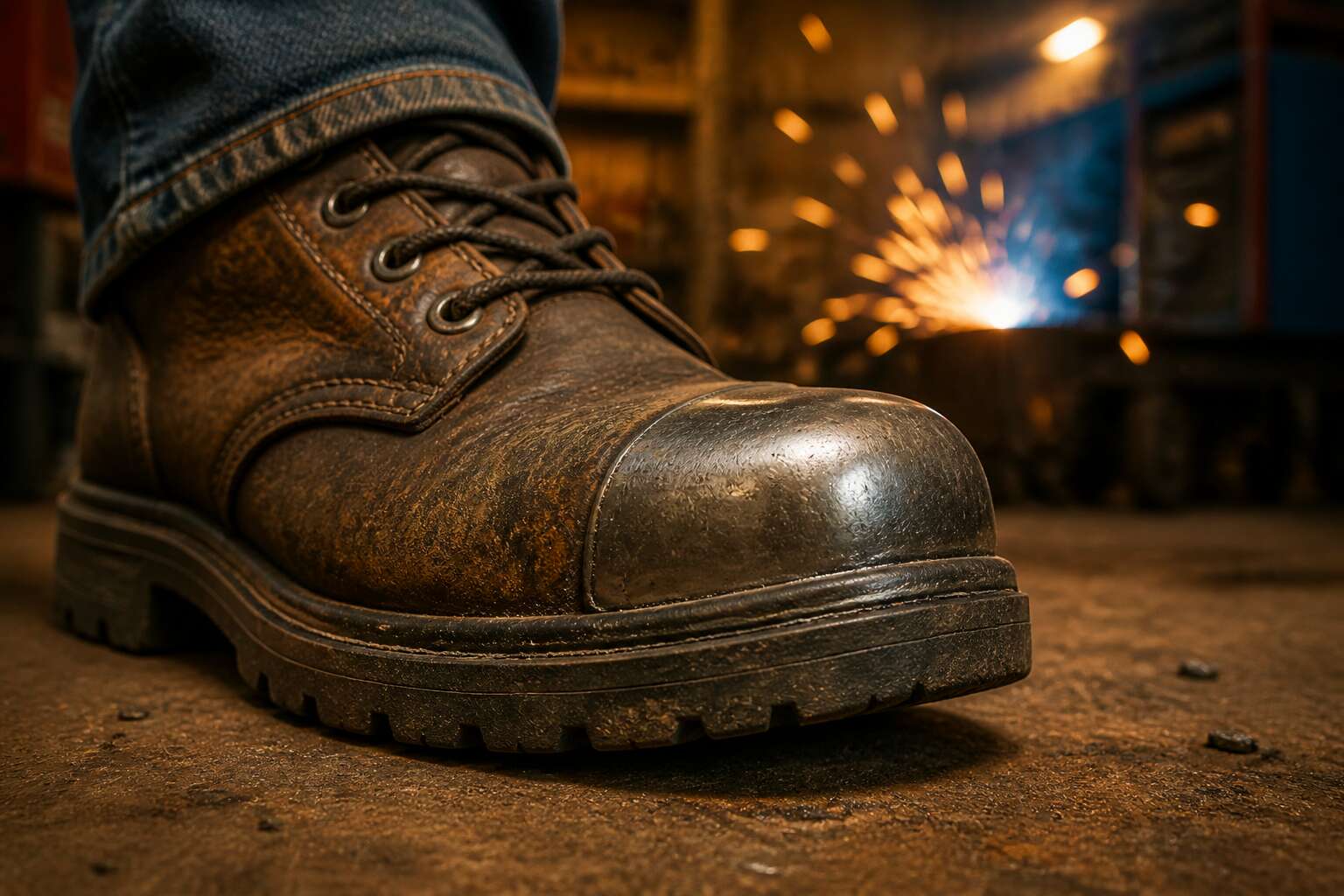
Understanding Toe Protection Standards
ASTM and EN ISO Standards
In South African mines, a single falling object can deliver 200 joules of kinetic energy. The safety boot toe is the first line of defense, yet many workers unknowingly wear boots that fail to meet the correct impact criteria.
Two major frameworks govern this protection. The American ASTM F2413 standard focuses on compression and impact resistance, while the European EN ISO 20345 specifies similar tests but adds unique penetration and sole requirements. Understanding these differences matters for compliance.
When comparing standards, consider these factors:
- Impact energy thresholds differ between ASTM and EN ISO
- EN ISO includes an additional metatarsal guard classification
- ASTM requires specific marking for electrical hazard protection
Selecting the right safety boot toe involves matching the standard to your workplace risk assessment. A mining site near Johannesburg may demand EN ISO certification, while a logistics warehouse could accept ASTM. Always verify the label.
Impact and Compression Ratings
There is a moment, in the quiet before a shift, when you can hear the hush of steel toes tapping on concrete. It is a sound of burden. A sound of promise. Beneath that metallic shell lies the only barrier between a metatarsal and the crushing weight of a rock fall. Impact ratings are not about passing a laboratory test; they are about the kinetic story of a 200 joule event that concludes abruptly against your boot. The standard dictates a maximum transmitted force of roughly 15 kilonewtons, but the residual pain, the micro-fractures, those are not in the spec sheet. I have seen boots that survived the blow, yet failed the man wearing them.
Compression is the quieter, more insidious threat. It is the slow grind of a heavy machine roller or the steady weight of a loaded pallet. The safety boot toe must withstand a compressive load of 11.3 kiloneutons, preserving a clearance of at least 12.7 millimeters above the foot. It is a narrow margin, a sliver of space that keeps blood flowing and nerves intact. Many forget that the toe cap is not just for falling objects; it is for the machinery that settles, the load that shifts, the ground that feels solid until it isn’t. A rating is a number, but the clearance is a survival metric. I recall a safety officer once told me that in his thirty years, he never saw a toe crushed by a direct drop. He saw them crushed by the weight of the earth itself.
To understand what you are buying, look for the markings. They are a language spoken in the dark.
– The protective cap location is marked with a toe designation.
– The impact resistance level is indicated by a number, often 75 for the foot pound rating.
– The compression rating follows a similar numerical code, indicating the load limit.
Each letter and number is a silent contract. The steel or composite alloy must yield to nothing, yet give way to the shape of your foot. It is a paradox of strength and flexibility. When you walk into a store, do not just look at the brand. Turn the boot over, read the embossed code, and know the specific limit of the safety boot toe you are trusting with your stride. The label is your only map in the fog of workplace hazards. Without it, you are walking blind. The standards ensure a baseline, but the wearer must ensure the match. Does the boot promise impact protection, or does it promise compression? They are not one and the same. In the deep mines, we learn to read the code before we read the ground. One wrong read and the silence comes for you.
Steel vs Composite vs Alloy Toes
The safety boot toe rarely gets the attention it deserves. In South African workshops, the material inside that cap decides how your day ends. Steel toes remain the old standard. They handle abrasion and resist deformation. They also turn cold in winter and conduct heat in summer. Composite toes use fibreglass or carbon fibre. They weigh less and do not interfere with electronic security gates. Alloy toes sit in between, usually aluminium or titanium. They offer a lighter option than steel with a slimmer profile.
- Steel: durable, conductive, heavier.
- Composite: non-conductive, lighter, less resilient to repeated blunt force.
- Alloy: thin profile, lightweight, but not always impact rated at the same level.
The safety boot toe must match the hazard. Heat, electricity, and weight all matter. I have seen workers refuse composite toes because they felt too flexible. Others switched to alloy to avoid the bulk of steel. Read the boot’s label before you trust it. Every material carries its own compromise.
Choosing the Right Toe Cap Material
Steel Toe Pros and Cons
Picture this: a construction manager in Johannesburg inspecting a site, and a labourer accidentally drops a steel beam onto his boot. The foot survives, thanks to a steel toe cap that has been the silent workhorse of industrial safety for over a century. Steel offers a level of protection that is both venerable and pragmatic, yet it comes with its own set of compromises that demand a discerning eye. For sheer impact resistance, it remains the gold standard, absorbing force that would shatter composite materials.
The true cost of this fortress-like protection is weight and thermal conductivity. A worker standing on a steel roof in the Mpumalanga sun will feel every degree of heat transfer, while a colleague in a cold storage facility in Cape Town will battle numb toes within an hour. This is not a trivial matter of comfort, but a genuine concern for alertness and safety.
The blunt steel toe also presents a subtle social hazard. We have all witnessed the spectacle of a worker crouching while wearing a pair of steel-toed boots, only to have the rigid edge dig into the top of the foot. It is a clumsy affair. The traditional design of the steel toe cap offers zero flexibility.
Herein lies the modern dilemma. While the raw force protection is exceptional, the trade-off in daily ergonomics is significant. Many workers now choose a hybrid approach, selecting a safety boot toe that uses a thinner, hardened steel alloy to shed some kilograms while retaining the protective character of the original. The choice is rarely about pure strength alone, but rather about the physical tolerance of the wearer who has to live inside that boot for twelve hours.
Composite Toe Advantages
Heat radiates through steel. On a December roof in Pretoria, that is a problem. Composite toes are lighter, thanks to materials like Kevlar and carbon fiber that weigh a fraction of steel. A composite safety boot toe uses non-metal fibers. It does not conduct heat or cold. It does not set off metal detectors.
For choosing the right material, consider the environment:
- Electrical work demands non-conductive protection.
- Security staff need boots that pass screening.
- Cold storage and hot roofs require thermal relief.
The trade-off is bulk. Composite toes are thicker than steel. You lose some boot volume. But you gain a lighter step. The right toe matches the hazard, not the price tag.
Alloy Toe Lightweight Options
When I hold an alloy toe cap, I feel the compromise it represents. It is not steel, not composite. Alloy toes, often aluminum or titanium, offer a lighter alternative to steel without the thickness of composite. The safety boot toe becomes a trade-off between protection and daily energy spent. On a factory floor, every gram matters over eight hours. Alloy toes pass impact tests, but they conduct heat and cold, so they suit temperate environments.
For those who need lightweight options, consider these factors:
1. Alloy toes are thinner than composite, preserving boot volume.
2. They weigh up to 40% less than steel, reducing leg strain.
3. They remain metal, so they trigger metal detectors.
Your foot moves differently with each material. I notice the difference on long shifts. The right choice is the one you forget exists. A safety boot toe should disappear into your stride, leaving only the work ahead.
Non-Metallic Toes for Electrical Safety
On a live site in Johannesburg, the electrician’s real adversary is not the voltage, it is the metal under his foot. A steel toe cap conducts electricity with alarming efficiency. That is why non-metallic toes exist.
Composite and fibreglass toes provide electrical hazard protection because they do not conduct. They insulate. This matters when you work near exposed conductors or switchgear. The safety boot toe acts as a barrier, not a conduit.
Consider these points when selecting for electrical work:
- Non-metallic toes are certified for electrical hazard resistance under specific standards.
- They do not create a spark risk in explosive atmospheres.
- They remain non-conductive even after impact damage.
I have seen workers assume their boots protect them. They do, until they do not. The right safety boot toe for electrical work is one that never becomes part of the circuit.
Fit, Comfort, and Safety Features
Proper Sizing and Toe Room
The right safety boot toe guards against crushing forces, but only when the boot fits properly7. In fact, mismatched sizing is why many workers abandon their protective footwear before the toe cap ever faces a real test. A boot that is too short lets the steel or composite toe press against your toes every time you walk, which causes pain and restricts blood flow. A boot that is too long allows your foot to slide forward, defeating the toe cap’s alignment and leaving your toes dangerously exposed.
Toe room is not just about length; it is about the vertical space above your toes. The safety boot toe cap should never rub against the top of your foot when you bend your knee. This is a critical detail that many overlook when they try on boots for the first time, especially in the late afternoon when feet naturally swell.
1. Wear the same socks you use on the job.
2. Check that your toes can wiggle freely without touching the front of the boot.
3. Walk on a sloped surface to ensure your heel stays anchored.
Remember, the safety boot toe is engineered for impact, but your own comfort determines how long you will keep it on. A boot that fits correctly will hold your heel snugly and give your toes a few millimeters of space to move. That slight movement is what prevents friction injuries and keeps your feet responsive on uneven terrain. Prioritize that space, and the protection follows.
Insulation and Weather Resistance
Roughly 80% of worker foot injuries involve fatigue or distraction, not just a single catastrophic strike. This is where insulation and weather resistance impact the safety boot toe more than the impact rating itself. A boot that allows cold to seep through the metal cap will make your toes numb within hours. Numbness kills the tactile feedback you rely on for balance.
Insulation is a layer of protection that sits between your foot and the outer shell. Thinsulate and wool blends trap warmth without adding bulk, which is crucial because excess material inside the boot can compress your foot against the safety boot toe. That compression restricts blood flow and recreates the same pain as a boot that is too tight.
Weather resistance is equally about the sole and the upper as it is about the toe. A waterproof membrane keeps moisture out, but if the boot lacks a sealed eyestay or a gusseted tongue, water seeps through the lacing area. A wet boot softens the leather, and a softened upper can flex inward, reducing the clearance above the safety boot toe.
South African conditions vary from humid coastal factories to dusty Highveld sites. Your requirements differ vastly from a worker in Mpumalanga timber fields to one on a Cape Town dock.
– Check for a water-repellent finish on the toe area, as this is the most exposed zone.
– Look for insulation rated to the lowest temperature you face daily, not a generic winter rating.
– Confirm the boot has a moisture-wicking lining to manage sweat, which can chill you in winter.
The interplay between insulation and the toe cap is a delicate balance. Thick linings can crowd the toe box, while thin linings offer little protection. A proper fit includes the thermal layer. When you try on a boot with insulation, the toe space changes. The sole also plays a part in weather resistance. A well-designed outsole with a deep tread and a thermal barrier between the footbed and the ground stops cold from radiating up through the sole. The safety boot toe only functions when the rest of the boot maintains a stable, dry environment.
Slip Resistance and Outsole Design
The best safety boot toe in the world is useless if the foundation beneath it fails. Slip resistance and outsole design are the quiet guardians of your balance, and balance is what keeps that heavy steel cap from becoming a hazard. A polished concrete floor in a Johannesburg warehouse and a rain-slicked scaffold in Durban demand different tread patterns. Deep, multi-directional lugs excel at evacuating mud and debris, while a flat, rubber compound with a high friction coefficient grips smooth, oily surfaces. The outsole is your first point of contact, and its geometry dictates your foot’s stability.
A tired foot shifts inside the boot, and that movement is what does the real damage. When your arch collapses from fatigue, your toes slide forward, slamming into the safety boot toe with every stride. This repetitive micro-impact is a primary source of chronic toe pain. A supportive midsole and a shank that resists twisting are the true comfort features. A boot with a refined heel shape offers a stable landing zone, reducing the ankle strain that makes you step carelessly. The sole’s rigidity directly influences how the toe cap behaves, as a flexible sole allows the foot to bend, which can pull the upper and the cap into your toes.
– Outsole compounds must resist heat, oil, and chemicals common in your specific sector.
– Lug patterns should self-clean to prevent the build-up of materials that reduce traction.
– The sole’s flex point should align with your foot’s natural metatarsal hinge.
Consider the midsole as the shock absorber between the outsole and your foot. A dense EVA or polyurethane midsole manages the kinetic energy of every step, preventing the jarring impact that radiates up through your heel and into the toe area. This cushioning is not a luxury; it is a functional safety component that preserves your stride. When the outsole and midsole create a stable platform, the safety boot toe remains in a fixed position, allowing you to move with certainty. Comfort is not a plush insole; it is the structural integrity that prevents your foot from sliding and colliding with the internal cap.
Metatarsal Guards and Additional Protection
The quiet war between your foot and the boot’s interior is won long before you lace up. Fit is the first line of defense, and it demands more than a simple size check. A boot that is too wide allows your heel to lift with each step, creating friction that shifts your entire foot forward. This forward creep is the enemy of the toes, driving them into the safety boot toe with brutal consistency. Conversely, a boot that is too narrow compresses the metatarsals, restricting blood flow and numbing the very nerves you need to feel the ground. The correct fit holds the heel in place while allowing the toes to spread, a balance that requires trying on boots in the afternoon when your feet have swollen to their working size.
Comfort is a structural integrity issue, not a soft insole. The insole provides initial plushness, but the lasting board and heel counter provide the real support. A rigid heel counter prevents the foot from rolling inward, which can misalign the ankle and force the toes against the cap’s sides. The lasting board, the foundation inside the boot, must have enough give to absorb shock without collapsing under load. When the boot’s internal architecture is sound, the safety boot toe sits in a neutral position. It protects without pressing, shields without punishing. The best test is to walk on an incline during the fitting. If the foot slides forward even slightly, the boot is not fit for purpose.
Beyond the toe cap lies the metatarsal guard, a shield for the upper foot that many workers overlook. This guard covers the metatarsal bones, the long arch of the top of the foot, which are vulnerable to falling objects that strike from above. In mining or heavy fabrication, a standard safety boot toe protects the toes only. A falling steel beam can crush the metatarsals, an injury that is almost impossible to repair fully. The guard sits under the boot’s leather, adding a layer of rigidity that also reduces flex. Less flex means less foot fatigue, creating a dual purpose for the feature.
A boot fitted with a metatarsal guard changes the lacing dynamics. The tongue becomes thicker, and the eyelets must be set wider to accommodate the extra volume. This is where integrated fit systems, like an internal gusset that locks the tongue in place, become critical.
– The gusset prevents debris from entering through the lace gap.
– The metatarsal guard must not pinch the top of the foot when the boot is laced tight.
– The guard’s edge should sit behind the toe cap, with no gap in coverage.
The safest safety boot toe is the one you forget you are wearing. When the fit locks the heel, the sole supports the arch, and the guard shields the metatarsals, the foot becomes a single unit with the boot. This unity allows you to focus on the task at hand, rather than the pain in your feet. The final consideration is weight. Additional protection in the form of a metatarsal guard adds mass. Your gait will change, and your stamina will be tested. The weight must be distributed evenly, not concentrated at the toe, which can cause the boot to drag and trip you. Look for a manufacturer that balances the weight with a lightweight composite toe, ensuring the extra protection does not compromise your mobility.
Break-In Period and Care
Your safety boot toe is a stubborn beast. It will not soften, flex, or forgive. The break-in period is about the leather and sole, not the cap. If that steel or composite shell presses your toes after two weeks of honest wear, you have a fit problem, not a patience problem. Stop suffering.
Care keeps the boot’s internal geometry honest. Dried-out leather shifts under load, which moves your foot forward into the toe. Clean off grime, condition the leather, and let the boots dry naturally away from heat. A blast from a heater or a brave afternoon in the sun will shrink the upper and wreck the fit.
Break them in properly:
- Wear them for two hours at a desk, not on a ladder.
- Add a second day of light walking, then check for hot spots.
- Only after a week, tackle full duty. Your toes will thank you.
Common Mistakes and Maintenance Tips
Avoiding Undersized Toe Caps
That quiet click of a hammer against a false floor, the weight of a beam, the pressure of a crowd. We trust our footwear to be the final sentinel. Yet, a common error remains: the selection of a safety boot toe that is a half size too small. It is a deception that reveals itself only after the blisters and the persistent, dull throb of a compressed nerve. This isn’t merely about comfort; it is about the structural integrity of the defense itself.
A boot that is too snug will not allow the internal materials to absorb impact correctly. The force transfers directly to the foot, rendering the protective shell almost ornamental. Furthermore, the friction from a tight cap is the primary catalyst for premature wear. Cut off circulation, and you dull the senses that warn you of danger.
To extend the life of your essential gear, consider these specific practices:
1. Remove the boots at the end of each shift to allow the footbed to decompress and dry.
2. Rotate two pairs if you work in a wet environment, preventing moisture from weakening the toe bonds.
3. Use a cedar shoe tree to maintain the shape of the last, especially during the off-season.
4. Inspect the toe cap area for hairline cracks or pitting after any significant impact.
Skipping these steps is a slow erosion of safety. Your feet swell in the afternoon heat; measure them at that time. A proper fit is the first line of defense. When the stitching gives way or the sole detaches, it is often the result of daily neglect against the harshest material, concrete. Invest in the ritual of care as much as the initial purchase, ensuring the armor stays true to its promise. Your toes, the anchors of your balance, deserve that fidelity, guarding your actual safety boot toe for the years of labor ahead.
Recognizing Wear and Tear
Every third safety boot toe I inspect on a Johannesburg site has a dent that shouldn’t be there. The first mistake is using the cap as a makeshift hammer. People actually do this. The second mistake is ignoring the white powder that appears on composite toes. That is not dried sweat; it is the material degrading.
Recognizing wear and tear means getting personal with your boots. Run a finger where the toe cap meets the sole. Separation there is fatal. Squeeze the cap. If it flexes under pressure, the safety boot toe is finished.
Common maintenance sins I see regularly:
- Storing boots in a car boot during a Highveld summer. Heat destroys the adhesive bonds.
- Polishing over cracks. Polish is a concealer, not a repair.
- Walking with a rattling toe cap. The internal structure has detached.
The boots owe you nothing. You owe them a regular inspection.
Cleaning and Conditioning Materials
The quote on every can of quality leather conditioner is true. “The lifespan of the boot is determined by the care it receives.” In the Highveld climate, where airborne dust acts as an abrasive paste, a weekly clean is not vanity. It is structural preservation for the safety boot toe.
Grime accumulates and dries out the leather upper. This stiffness transfers stress to the stitching that anchors the toe cap. A brittle material will crack under repeated flexion, exposing the internal structure to moisture. That moisture is the true enemy, accelerating corrosion in steel models and delamination in composites.
Cleaning requires a mild saddle soap and lukewarm water. Brush away dry dirt first. Work the soap into a lather and wipe with a damp cloth. Then let the boot air dry away from direct heat. This is the essential transition before conditioning.
Conditioning replaces the natural oils that industrial solvents and cement dust strip away. Apply a balm or oil sparingly with your fingers. Work it into the leather, especially around the toe cap seams. Let it absorb for a few hours. The goal is supple leather that flexes with your foot, not a greasy film that attracts more dust.
The final step is the dry routine. Every third day, wipe the safety boot toe with a dry cloth to remove static-attracted particles. This simple act prevents microscopic scratches which diminish the surface integrity over years of wear.
Replacing Expired Safety Footwear
One common mistake is treating the safety boot toe as a lifetime component. Even when the outer leather looks pristine, the steel or composite inside may harbor hidden stress. Manufacturers print a production date on the heel or shaft; ignoring it is a gamble. In daily industrial use, six to twelve months is a realistic service life.
I have watched workers in Johannesburg keep the same pair for years because the boots still feel snug. Comfort is not a valid expiry test. If the safety boot toe has absorbed repeated impacts, its structural integrity is already compromised. Schedule replacement by calendar date or workload, not by appearance. Rotating two pairs can extend each one’s life, but only if you honour the replacement date. A boot that has expired is a liability, no matter how well it was maintained.
Industry-Specific Recommendations
Construction and Heavy Machinery
Every construction site in South Africa tells a story through its boot soles. Watch a worker navigate a rebar-strewn slab or balance on a scaffold edge and you see the real test of the safety boot toe. The ground shifts, loads swing, and one misplaced step can mean a dropped beam landing squarely on your foot. In this environment, the toe must handle more than a simple drop. It must resist the crushing pressure of a concrete panel sliding against the side, or the sharp angle of a falling shard of quarry stone.
For those working around heavy machinery, the requirements shift entirely. You are not walking while carrying a load. You are standing still while several tonnes of articulated dump truck roll past your position. A glance down at your boots reveals why the toe cap requires dedicated attention. The operator’s blind spot is your danger zone, and the only barrier between your metatarsals and a spinning tyre is that reinforced shell.
– Look for a wide base on the toe cap to prevent lateral slippage on sloped terrain
– Prioritise a boot with a raised toe spring that keeps the cap clear of rock edges
– Consider a toe cap that extends further back toward the metatarsal area for added insurance
The dust hangs thick in the air here, and it settles into every crease of the leather. That grit becomes a grinding agent, wearing down the composite fibres or the steel shell from the outside in. The safety boot toe on a mine site faces constant abrasion from crushed rock and jagged shale. It is not enough to check the boots at the end of a shift; you need to feel the surface of the cap for pitting or scuffs that could compromise its integrity on the next impact.
Warehouse and Logistics Roles
A warehouse picker in Gauteng walks roughly 12 kilometres per shift, and every step lands on the same safety boot toe. Forklifts reverse with loads stacked high, and a dropped pallet board can crack across the foot without warning. The toe cap must absorb repeated knocks from trolleys and racking, not just a single heavy impact.
For logistics staff, durability matters more than peak force. The cap faces continuous abrasion against concrete floors and dock levellers. Scan the toe of a veteran picker’s boot and you see scuffs that tell you how often they work in tight aisles.
A cap that resists surface wear keeps its shape after hundreds of bumps. The safety boot toe also sits low enough to slide under pallets without catching.
Electrical and Welding Environments
The electrician’s environment pits the safety boot toe against two forces at once: electrical current and molten metal. A welding spark landing on a steel cap may not hurt immediately, but the spark welds itself to the metal, creating a permanent hot spot that burns through leather over time.
Electrical work adds a silent layer of danger. A hairline crack in a composite safety boot toe can trap moisture, turning a non-conductive cap into a secret pathway for current. The heat from a grinder and the voltage from a live panel ask for contradictory properties.
Consider these realities:
- Molten slag drops that cling to a steel toe and ignite the boot’s stitching.
- Kneeling on a steel-toed boot during close quarters work, allowing heat to travel straight down to the toes.
Food Service and Healthcare Variants
Kitchen floors turn a safety boot toe into a cleaning liability. Oil splashes and acidic juices work their way into every seam. A welded steel cap resists knife drops but transfers heat from a tipped pot straight to the foot. Composite toes stay cooler, yet their surfaces can develop micro scratches that harbour bacteria.
Hospitals ask for the opposite. I have seen a safety boot toe in theatre fail not from impact, but from sterilising agents eating the cap’s seal. South African hospital wards face the same pressure, with constant mopping and heavy foot traffic. The material’s porosity matters more than its impact rating. Closed-cell finishes and seamless caps prevent fluids from pooling.
The variants split along two lines:
- Food service demands corrosion resistance against daily chemical washing.
- Healthcare demands a non-porous cap that pathogens cannot penetrate.
Both settings punish a toe that traps moisture or debris.

0 Comments