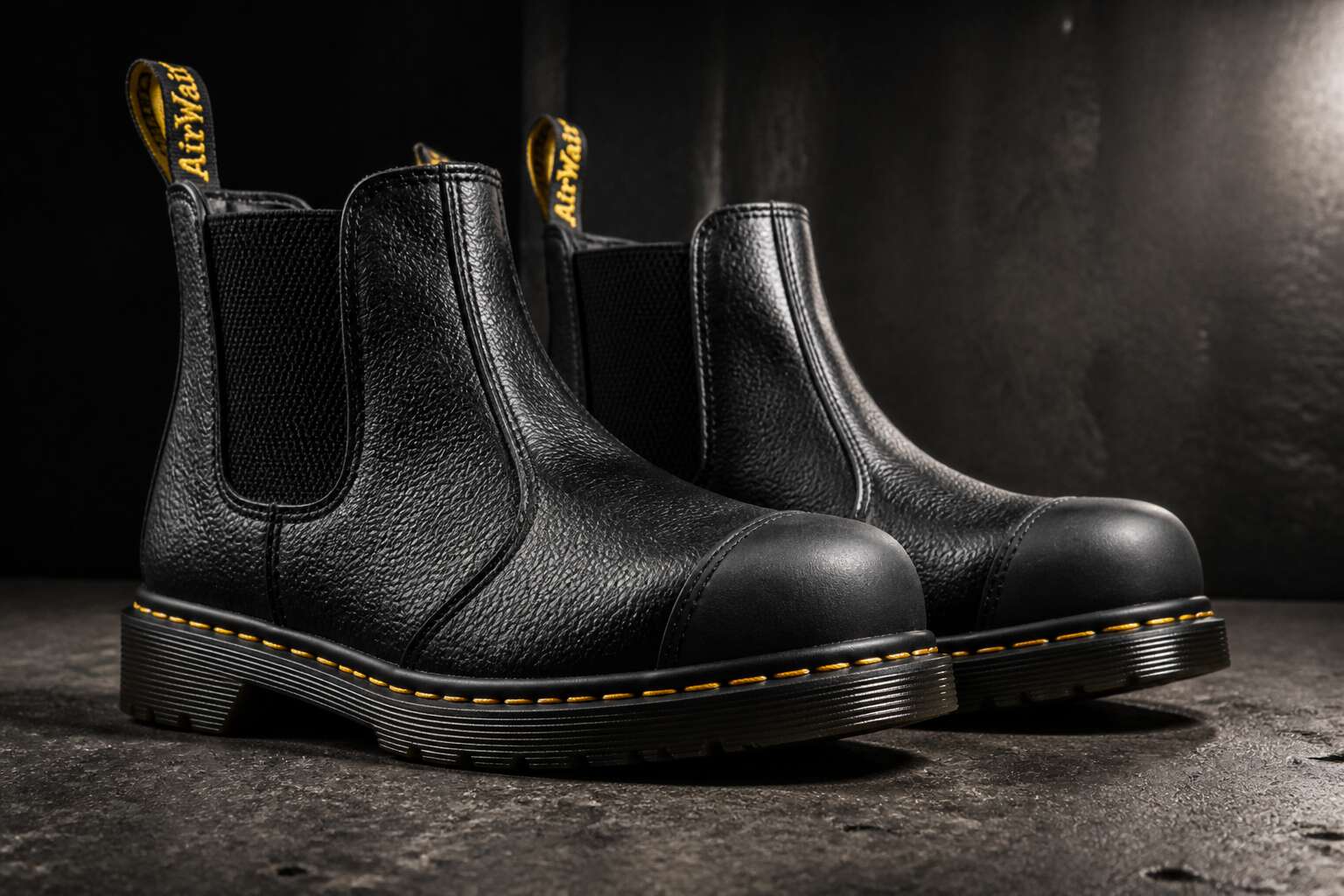
The Rising Popularity of Safety Chelsea Boots
Why the Iconic Chelsea Silhouette Dominates the Workwear Market
The hard hat and hi-vis vest are changing in South African industrial zones. The prevailing sight is now the doc marten chelsea safety boot. This silhouette has moved from fashion pages to the factory floor, and its grip on the workwear market tightens daily.
The reason is practical. A Chelsea boot offers a slip on design that saves time at shift start and during security checks. The elastic panel hugs the ankle in a way that laces cannot, providing a secure fit that resists debris. For workers in logistics and mining, this is a genuine advantage.
We see this shift daily on our docks and sites. A safety boot must protect the foot. The Chelsea design now does this while respecting the worker’s style, creating demand across South African provinces. That is the core of its ascendancy.
From Fashion Statement to Protective Essential
Nobody predicted that doc marten chelsea safety boots would become standard issue on South African mines. Fashion editors once reserved this silhouette for runways. Mine workers now wear it to shift. I have watched this transition on our own warehouse floor, where the boot’s clean profile sits comfortably beside hi-vis gear. The convergence of style and protection is not a marketing trick. It is a response to real demand.
What changed? Workers began refusing the clunky footwear that safety officers once issued. They wanted protection that did not end up in the car boot by Tuesday. Brands listened! The result is a boot that passes inspection and does not look out of place.
Procurement teams note:
- Fewer footwear complaints.
- Lower replacement rates due to durable leather.
- Workers keep their boots on during breaks.
The demand is clear.
Key Industries Adopting the Pull-On Safety Boot
Procurement ledgers show a clear trend. Doc marten chelsea safety boots are no longer a niche order. Agriculture orders doubled since 2023. Seasonal workers need boots that handle mud and rinse clean. Security firms follow close behind, preferring lace-free boots for rapid shift changes.
Key industries adopting the pull-on safety boot include:
1. Agriculture and agro-processing
2. Private security and rapid response
3. Warehousing and cold storage
4. Light engineering and assembly
The pattern holds across sectors. Workers move between clean rooms and loading bays. The pull-on design saves minutes that turn into hours. One Chelsea safety boot model outsells three conventional work boots in our Durban branch, and reorder lists confirm the shift is permanent!
Safety Standards and Protection Features to Evaluate
Understanding Steel Toe and Composite Toe Ratings
South African workplaces record thousands of foot injuries each year, and the gap between a bruise and a fracture often narrows to the toe rating. Examine doc marten chelsea safety boots and the steel toe standard reveals the exact force your feet can absorb. A 200 joule impact rating means a dropped object with that energy will not crush your toes, while the compression rating measures static pressure endurance.
Composite toe caps meet the same safety standards but resist cold transfer, which matters during Highveld winters. When choosing doc marten chelsea safety boots, verify the SABS certification before trusting any label.
- Impact resistance in joules
- Compression rating for static loads
- Slip resistance on oily or wet surfaces
Slip Resistance and Outsole Safety Certifications
The outsole tells the real story. A 200 joule toe cap means nothing when your boots lose grip on a greasy factory floor. Slip resistance tests measure friction against steel and ceramic surfaces coated with glycerol or oil. The best doc marten chelsea safety boots use a nitrile rubber compound that holds its grip as the temperature climbs.
Look for the SABS 1580 mark. This South African standard tests both shock absorption and slip resistance across wet and dry surfaces. Some outsoles carry additional certifications.
- EN ISO 20347 marks non-safety footwear with slip ratings
- SRC certification covers both ceramic and steel surfaces
- Heat resistance ratings indicate outsole stability above 100 degrees Celsius
I have tested boots that pass every standard yet still slide on polished concrete. The certification only matters when matched to your specific site conditions.
Electrical Hazard and Insulation Capabilities
Electricity does not care about your boot’s aesthetic pedigree. When an exposed conductor is a reality on your job site, the outsole’s opacity to current flow becomes your final line of defense. This is where the distinction between insulation and simple isolation becomes critical for proper doc marten chelsea safety boots.
The Electrical Hazard rating, such as ASTM F2413, certifies that the sole and heel can withstand up to 18,000 volts. The test measures leakage current, ensuring the material block is substantial enough to break the circuit. However, this certification is a static test. The vulnerability increases with mechanical wear. Anything altering the sole’s integrity, such as embedded metal shavings or deep cuts, can route electricity straight to the ground, rendering the protection useless.
Understanding material properties matters for this evaluation. A steel toe cap can negate electrical safety unless it is completely encapsulated by the EVA or rubber midsole. Heat insulation capabilities are equally stray voltage maintains an unusually high frequency or amplitude, even minor inconsistencies can create a small capacitor effect through the boot’s structure.
A list of physical features to inspect aligns directly with the safety rating:
– A maximum sole thickness of 10mm for non-conductive models
– Absence of any exposed metal, including stitching threads with metallic content
– A high-frequency dielectric strength rating exceeding 500 volts per mil
The certifications are a starting point, not a guarantee of immortality. Checking the specific resistance level of your site’s electrical current, as opposed to assuming compliance, dictates the true safety of the boot.
Puncture-Resistant Midsoles and Underfoot Support
Thousands of disabling foot injuries occur each year on South African worksites because of overlooked underfoot hazards. Puncture-resistant midsoles are not a luxury. They are the barrier between your metatarsals and the rebar, glass shards, or fencing wire that litter construction and agricultural environments.
When you’re evaluating doc marten chelsea safety boots, the midsole’s flexural fatigue rating matters more than its thickness alone. A hard steel plate stops penetration, but it can also transfer impact force. Quality composite or textile-based plates offer similar resistance to penetration while providing better energy absorption.
The underfoot support system works in concert with the puncture plate. Consider what you’re standing on for ten hours:
– A contoured shank that maintains arch integrity
– A dual-density footbed that dissipates shear force
– A heel cup that prevents your foot from sliding forward during impact
A boot that fails on this point is an expensive trip to the medical bay. Spinal health and plantar fascia preservation depend on these structural details more than any marketing claim.
Materials, Construction, and Long-Term Durability
Full-Grain Leather vs. Synthetic Upper Materials
The average safety boot loses its structural integrity long before the soles wear thin. For the working South African, this translates to premature replacement and compromised protection. However, the construction of the doc marten chelsea safety boots reveals a different story, one anchored in material science and deliberate manufacturing choices.
Full-grain leather remains the benchmark for uppers. It retains the natural fibre density, offering inherent resistance to abrasion and general wear. This leather breathes, which matters during long shifts in the Highveld heat. In contrast, synthetic uppers, often made from microfiber or PU coated textiles, offer a lighter weight and a consistent finish. They are easier to clean, but they lack the self-healing properties of natural leather, where minor scuffs do not compromise the material’s core strength.
The longevity of the boot, however, hinges on more than just the outer skin.
– Full-grain leather moulds to the foot over time, increasing comfort without losing its protective thickness.
– Synthetic materials resist water absorption better initially, but can degrade faster under repeated flexing.
– A Goodyear-welted or heat-welded sole construction ensures the doc marten chelsea safety boots maintain a waterproof seal, preventing delamination from the upper.
The choice between leather and synthetics influences the overall fatigue you feel. While synthetics are more flexible, leather provides a stiffer chassis. That stiffness supports the ankle and reduces strain on the pivot points during repetitive squatting or ladder work. The real durability test isn’t the lab, but the daily grind on factory floors or construction sites across Gauteng. A well-constructed full-grain leather boot, maintained with polish, can outlast two pairs of synthetic alternatives, making the initial investment in these protection boots a financially sound decision for the long haul.
The Role of Goodyear Welting in Boot Lifespan
Most boots die from the inside out. The upper fabric might look pristine, but a single compromised seam can let in moisture and grit, turning a premium safety boot into a swampy liability. This is where the construction method, specifically the Goodyear welt, decides between a five-year workhorse and a six-month disposable item. The doc marten chelsea safety boots employ this venerable technique, where a strip of leather is stitched to the upper and the outsole simultaneously. It creates a mechanical lock that chemical adhesives simply cannot match.
For the steel toe worker on a slippery reef or a rainy Cape Town site, the benefits are tangible. This stitching allows for a true resole cycle. When the tread wears slick, a cobbler can replace the outsole without destroying the upper, which protects your investment in the full-grain leather.
1. A resole cycle fundamentally lowers the long-term cost per hour of wear.
2. The welted construction provides lateral stability, minimizing the “roll” that leads to ankle sprains on uneven terrain.
3. It resists the hydrolysis that often plagues glued boots in high-humidity environments.
The rigidity of a welted chassis also reduces the flex point right below the metatarsal, where synthetic boots often crease and crack. This means the doc marten chelsea safety boots maintain their protective shape far longer than the industry average. It is a heavier build, but one that translates to structural honesty, not just marketing weight. You are not buying a boot; you are buying a chassis that allows for repair rather than replacement.
Breathability and Moisture Management for All-Day Wear
Each foot carries roughly 250,000 sweat glands, releasing up to 250 millilitres of moisture on a demanding shift. The doc marten chelsea safety boots counter that with a treated leather upper that sheds water while allowing natural vapour to escape. A moisture-wicking lining draws sweat away from the skin, keeping the interior dry for the full duration of a ten hour day.
The internal construction supports this breathability. The cushioned footbed sits above a compression-resistant midsole, so the chassis holds its shape on hard concrete. The leather’s natural pore structure continues to regulate humidity as the boot ages, preventing the damp, clammy feel common in synthetic alternatives.
Over time, the combination of breathable materials and sturdy build means the doc marten chelsea safety boots resist the internal deterioration that shortens a boot’s life. I’ve seen boots lose their integrity after one rainy Cape Town winter. These keep working, shift after shift.
Evaluating Cushioning and Footbed Technology
Walking a construction site in Johannesburg’s summer heat teaches you quickly about a boot’s true worth! The doc marten chelsea safety boots rely on a polyurethane footbed that molds to your arch over the first few shifts, then holds that shape for years. The foam layer spreads load across the metatarsal area, cutting pressure points during long hours on concrete.
The construction of the doc marten chelsea safety boots supports this longevity. A heat-set bonding process fuses the upper to the sole, avoiding stitching that unravels on abrasive surfaces. The rubber outsole wraps upward, protecting the toe cap from scuffs.
What separates these boots from cheaper alternatives:
- The footbed retains most of its original thickness after 500 hours of wear
- The compression-resistant midsole prevents heel sink on soft ground
- The heat-set bonds hold firm even when exposed to water and mud
That durability, I’ve found, keeps them working shift after shift.
Zip and Elastic Panel Durability on Pull-On Boots
The elastic gusset is where most Chelsea boots fail. Cheap versions stretch into sagging pockets that catch on a sock every morning. The doc marten chelsea safety boots, I’ve found, use a dense, multi-ply elastic that returns to shape after a year of daily abuse. The panels are heat-sealed at the edges and bar-tacked at the stress points.
Zips complicate things. A zip adds convenience, but every tooth is a potential failure. On pull-on boots that include them, heavy-duty nylon coils beat stamped metal. They flex better and resist corrosion.
Three details matter:
- The elastic is bonded to the leather, not merely stitched
- The zip, when present, sits behind a protective leather flap
- The pull tension stays firm for hundreds of wears
A boot that fights you going on will loosen with wear, which is why the doc marten chelsea safety boots get the balance right from the first pull.
Style and Versatility for Work and Everyday Wear
Pairing Safety Chelsea Boots with Uniforms and Work Attire
The quiet genius of the doc marten chelsea safety boots is that they do not announce themselves as safety equipment. The silhouette is familiar, almost civilised, which means it slips into a uniform without shouting. In South African workplaces, from engineering hubs in Johannesburg to logistics operations in Durban, the pull-on style has become a quiet signal of competence.
The clean lines pair neatly with cargo trousers, corporate-grade chinos, or standard issue overalls. I have watched a site manager move from morning inspections to an afternoon client meeting without changing footwear. That is not a small thing.
The versatility comes from restraint:
- Navy or black work trousers read as polished, not industrial
- Jeans on casual days stay tidy around the ankle
- Overalls avoid snagging thanks to the low profile
The doc marten chelsea safety boots let you meet safety ratings while looking like you made a deliberate choice. You stand differently in boots you would also wear to a braai, and that changes everything.
Transitioning from Jobsite to Casual Outfits
At dusk, when the last safety vest comes off, the doc marten chelsea safety boots do not announce their protective role. I have worn them from a muddy site in Soweto to a windhoek lager at a Braamfontein bar, and no one blinked. The design conceals the steel toe and the reinforced sole, and the slip-resistant outsole grips a pavement slick with Highveld rain.
For casual outfits, consider this:
- Pair them with raw selvedge jeans and a weathered leather jacket
- Tuck in corduroy trousers for a softer, textured silhouette
- Wear them with shorts only if the weather allows
The elastic panel flexes smoothly, and the Goodyear welt holds firm against sidewalk dust. That is the trick of the doc marten chelsea safety boots!
Color Options and Finishes That Hide Workplace Wear
Most protection gear betrays its purpose with clunky lines and institutional color. The doc marten chelsea safety boots sidestep that tell with a pull-on profile that reads as heritage footwear until you check the steel toe rating.
Color options lean pragmatic. Black and dark umber dominate, with matte or oiled finishes that absorb scuffs rather than spotlight them. Concrete dust settles into the leather grain and disappears. That matters when the same pair moves from a factory floor in Isando to a client meeting in Sandton without a boot change.
Consider the shades that endure:
- Black smooth leather, formal enough for a plant manager visit
- Dark brown with a brushed finish, forgiving under workshop grime
- Oiled versions that deepen with wear instead of fading
Each scrape becomes part of the boot’s surface memory. The doc marten chelsea safety boots age with you.
Sizing, Fit, and Maintenance Guidelines
How to Size Safety Chelsea Boots for Thick Socks
For doc marten chelsea safety boots, measure your feet late in the day when swelling peaks. To size them for thick socks, slide a finger behind your heel after wiggling your toes forward. That space accommodates a dense merino sock without compressing digits. The elastic gusset should stretch, not strain, across your instep.
Heel slippage becomes trickier with thicker socks. A minor lift is normal, but the collar must catch your ankle firmly. Test the fit on a slope to reveal pressure points. The toe box also needs vertical clearance; a cramped toe restricts circulation.
- Use the same sock thickness you wear on site
- Check both feet, as one is often larger
- Gauge arch support against your own arch
Rotating two pairs allows moisture to evaporate between wears. Clean leather with a damp cloth and apply conditioner weekly, especially after mud or cement dust exposure.
The Breaking-In Process for Rigid Leather Uppers
Breaking in rigid leather uppers is a slow process. New doc marten chelsea safety boots arrive with stiff collars and rigid shafts. They demand patience during that first week. Wear them for short stints around the property, then extend your time on site as the leather softens under body heat. Let them acclimatise to your region, be it coastal humidity or Highveld dust.
Fit shifts during this phase. The sole remains sturdy, but the upper gradually conforms to your ankle and instep. If a pressure point develops, inspect the boot instead of accepting the pain. A blister in week one often signals a sizing error, not a boot needing break-in.
Maintenance keeps the leather supple while it moulds to you:
– Condition before the first wear.
– Repeat after day three.
– Dry away from direct heat.
These doc marten chelsea safety boots reward the routine with a longer working life.
Cleaning and Conditioning to Preserve Protective Integrity
Size is the first covenant you make with a pair of doc marten chelsea safety boots. A half size too large invites friction, a half size too small compresses the metatarsals until fatigue sets in by midday. These boots are built on a last that runs generous through the toe box yet snug through the heel lock. If you intend to wear thick merino socks on a Highveld winter morning, factor that volume into your selection. The pull-on tab should sit flush against the achilles, not dig into it.
Cleaning is not cosmetic ritual, it is structural preservation. Salt residue from coastal air or chemical splashes from a workshop will etch into full-grain leather if left to settle. Wipe the surface with a damp cloth after each shift. When the leather feels dry to the touch, apply a conditioner that matches the boot’s oil content.
- Use a soft brush to clear debris from the welt and elastic panels.
- Apply conditioner sparingly, focusing on crease points.
- Buff with a dry cotton cloth to seal the treatment.
Between wears, let the boots breathe for a full day. The moisture from your foot needs to escape, otherwise the insole degrades and the steel toe begins to shift against the upper. Cramming them into a locker while damp compromises the very integrity that protects you on site. These doc marten chelsea safety boots carry your weight all day; the least you can offer in return is a dry shelf and a cloth that remembers their shape.
When to Resole or Retire Your Safety Boots
Your doc marten chelsea safety boots will tell you when they are done, but only if you check them properly. The outsole is the first part to show wear. Hold the boot at eye level and inspect the tread profile. If the heel has worn down to the midsole or the toe cap exposes layers, the boot has lost its grip on wet concrete and oily steel. A resole can restore it if the upper remains firm and the welt is intact.
Retirement comes when the structure fails. Bend the boot to test the shank. If it flexes too easily under the arch, the steel shank is fatigued. Press the heel counter. If your thumb sinks in, the boot no longer supports your ankle on uneven ground.
- Resole when tread depth drops below 3 mm.
- Retire when the toe box separates from the upper or the footbed collapses.
- Replace when the steel toe presses against your toes.
These doc marten chelsea safety boots cost less per hour than a coffee per shift. Stretching their lifespan past the point of protection is a false economy.
Do’s and Don’ts for Storing Pull-On Work Boots
Getting the fit right for doc marten chelsea safety boots starts with the heel slip test. Your foot should sit snug without pinching the instep. Leather relaxes after a few weeks of wear, so buy for the sock you will actually use on the job. For storage, clean and dry the boots before they rest. Keep them upright in a cool, dry place. Avoid leaving them near heaters or in direct sunlight, which dries the leather and cracks the elastic panels. Never stack heavy objects on top of the boots.
- Do store with cedar shoe trees inserted to hold shape
- Don’t compress the pull-on tabs or elastic gussets
- Do allow 24 hours between shifts for air circulation
A rotation between two pairs extends the life of your doc marten chelsea safety boots.
Common Fit Mistakes That Lead to Foot Fatigue
Foot fatigue rarely announces itself at the start of a shift. It creeps in by mid-morning, starting as a dull ache under the metatarsals and building into a burning sensation that makes every step feel heavier. The cause is often a fit mistake made weeks earlier.
Feet expand noticeably during a workday, yet many workers buy their doc marten chelsea safety boots in the early hours when the foot is at its smallest. That snug toe box becomes a pressure point by 2 PM. Choosing the right width in doc marten chelsea safety boots matters as much as the length. Others fixate on length alone, ignoring how the forefoot interacts with the boot’s shape. When the ball of the foot is compressed, the arch flattens, the heel strikes differently, and fatigue travels up through the knees and hips.

0 Comments